-


Heloísa Paço Moreira ha publicado una actualización en el club
hace 3 semanas Pastry & Bakery
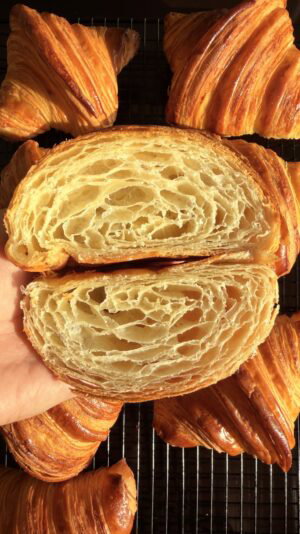
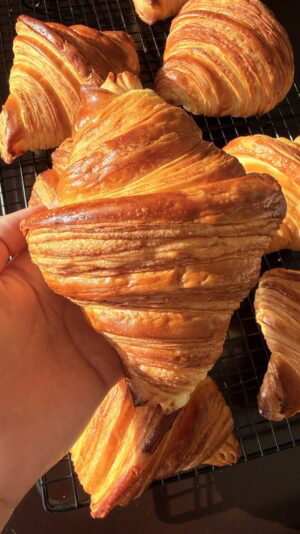
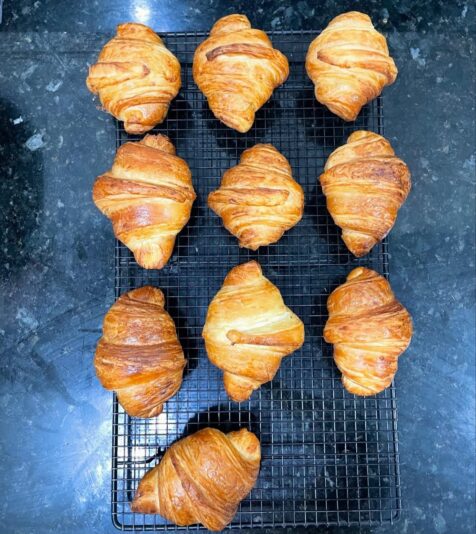
Esta es la cuarta vez que hago cruasanes. Me encanta la bollería. He hecho dos cursos online sobre cruasanes y hace poco me he comprado una laminadora manual, así que voy a estar haciendo muchas pruebas con cruasanes por aquí. 🥰
This is my 4th time making croissants. I’m completely in love with viennoiserie. I’ve taken two online croissant courses and recently bought a manual dough sheeter, so I’m going to be doing a lot of croissant testing around here. 🥰
 Traducido del inglés
 Lyubomira Tuykova Tuykova, André Mellergardh y12 más12 Comentarios
-
Level:
 Scoolinary Team
¡Y solo es tu cuarto intento! 🥐 Se nota que estás profundizando en el laminado. Las capas exteriores están muy bien definidas, el dorado es bastante uniforme y, al ver el corte, destaca ese alveolado abierto que buscamos en un buen cruasán. La laminadora manual te va a permitir controlar mejor el grosor y repetir resultados. Te lanzo una pregunta: ahora que puedes trabajar con más precisión, ¿qué te gustaría perfeccionar primero, la regularidad del alveolado, el volumen o esa textura crujiente del exterior? Y, por curiosidad, ¿qué ha cambiado más entre tu primer intento y este cuarto?
-
@soldamiani Me sumo a las preguntas de Sol, ya que estaba a punto de escribir más o menos lo mismo que ella: ¡me parece impresionante que lo hayas conseguido en solo cuatro intentos, ya que los cruasanes y la viennoiserie son un reto increíble!
Aunque quizá pueda añadir algunas cosas más: a algunos les vendría bien saber qué cursos has hecho; ¿nos referimos a los de Antonio Bachour, a los de Hans Ovando o a los de otra persona?
Además, no soy precisamente una experta en cruasanes, así que ¿puedo preguntarte si tienes alguna idea de por qué, en el aspecto exterior, la parte de la unión (el centro donde termina el triángulo enrollado) parece haberse desplazado un poco del centro? ¿Es algo habitual o solo se nota en el que has fotografiado? Tengo mucha curiosidad por saber si esto se debe a algún detalle insignificante o algo así, ¡porque a mí también me ha pasado unas cuantas veces! 🙈@soldamiani I will second Sol’s questions as I was just about to write approximately the same as her – I find it very impressive that you got here in only four attempts as croissants and viennoiserie are incredibly challenging!
I may add though a few more things: It may be helpful to some to know which courses you have done – are we talking about Antonio Bachour’s courses, Hans Ovando’s or someone else’s?
Also I am not quite a croissant expert, so can I ask if you have any ideas why for the outside look the seal part (the middle where the rolled-up triangle ends) kind of moved away from the middle? Is it a consistent thing or just showing for the one you photoed? I am quite curious if this comes from a tiny thing or whatever, because it happened to me a few times, too! 🙈
1hace 2 semanasTraducido del inglés
-
@rekahorvathr-e2c3b8 Muchas gracias. Los dos cursos que hice no eran de esta plataforma; eran dos cursos en línea impartidos por instructores expertos brasileños. Me gustaron mucho por su gran nivel de detalle; me vinieron de maravilla, ya que nunca antes había tenido experiencia con la viennoiserie. También tengo pensado hacer los cursos de cruasanes aquí, en la plataforma, para mejorar aún más.
En cuanto a la parte del cierre (la zona central donde la punta del triángulo acabó desplazándose del centro), también tengo curiosidad por saber qué ha pasado. Me ha ocurrido otras veces, aunque no en todos y cada uno de los cruasanes. Creo que puede deberse a que no lo enrollé recto por el centro; sin duda, tengo que mejorar mi técnica de modelado.@rekahorvathr-e2c3b8 Thank you very much. The two courses I took were outside this platform, they were two online courses taught by Brazilian expert instructors. I really enjoyed them because of the rich level of detail, they were great for me, as I had never had any prior experience with viennoiserie. I also plan to take the croissant courses here on the platform to improve even further.
As for the seal part (the middle where the tip of the triangle ended up shifting off-center), I’m curious about that as well. It has happened other times, though not on every single croissant. I think it might be because I didn’t roll it straight down the center, I definitely need to work on my shaping.hace 2 semanasTraducido del inglés
-
-
@soldamiani Muchas gracias. En primer lugar, me gustaría mejorar el modelado y estandarizar las capas para que haya al menos nueve pasos o vueltas visibles. También quiero conseguir una miga más uniforme.
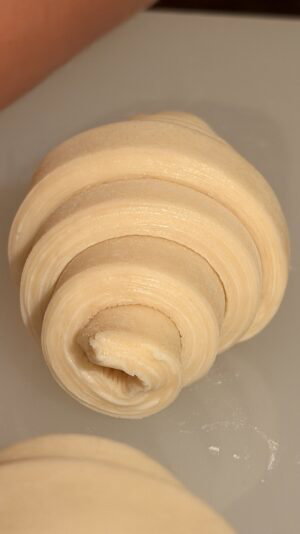
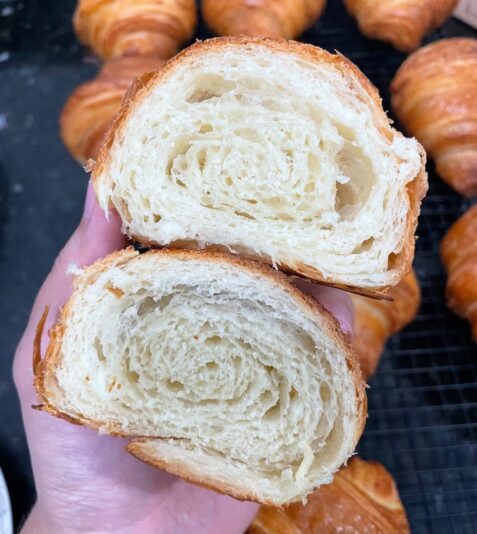
En cuanto a lo que ha cambiado desde mi primer intento hasta este cuarto: en mi primera tanda, algunos cruasanes quedaron irregulares y la miga abierta (alvéolos) no era homogénea; me di cuenta de que la mantequilla se derritió durante el proceso de laminado en algunos de ellos. Para este cuarto intento, he controlado constantemente la temperatura tanto del bloque de mantequilla como de la masa para evitar que eso volviera a ocurrir, y también he intentado controlar la temperatura ambiente de la habitación. He respetado los tiempos de reposo; cada vez que notaba que la mantequilla empezaba a derretirse, la volvía a meter en la nevera un rato antes de empezar el siguiente pliegue. Cuando la masa empezaba a resistirse y resultaba difícil de extender, la dejaba reposar para que se relajara. Adjunto algunas fotos de los cruasanes de mi primer intento. En cuanto consiga una forma uniforme y una miga homogénea, tengo pensado experimentar con diferentes formas de cruasán.@soldamiani Thank you very much. First, I would like to improve the shaping and standardize the layers to at least nine visible steps/turns. I also want to achieve a more uniform crumb.
Regarding what changed from my first attempt to this fourth one: in my first batch, some croissants turned out uneven, and the open crumb (alvéoles) wasn’t consistent, I noticed that the butter melted during the lamination process in a few of them. For this fourth attempt, I constantly monitored the temperature of both the butter block and the dough to prevent that from happening again, and I also tried to control the ambient room temperature. I respected the resting times, whenever I felt the butter was starting to melt, I placed it back in the fridge for a while before starting the next fold. When the dough started fighting back and was difficult to roll out, I let it rest and relax. I’m going to attach some photos of the croissants from my first attempt. Once I manage to get a consistent shape and an even crumb, I plan to experiment with different croissant shapes.
hace 2 semanasTraducido del inglés
-
Level:
Scoolinary Team
@heloisapacomoreira ¡Lo que más destaca es lo mucho que tu proceso se ha vuelto más metódico, Heloísa! Controlar las temperaturas, respetar los tiempos de reposo y saber cuándo la masa necesita descansar son precisamente los hábitos que aportan consistencia a la bollería. 🥐
Al ver tus fotos, se aprecia que las capas se están formando, aunque la miga todavía presenta algunas zonas más compactas junto a cavidades más grandes. Para tu próxima tanda, yo me centraría en el modelado: intenta mantener las mismas dimensiones del triángulo, extender la masa con una tensión uniforme y colocar la punta por debajo. Eso debería ayudarte a conseguir uniformidad sin cambiar demasiadas variables a la vez.
Tengo curiosidad: ¿has notado si las puntas descentradas se producen con más frecuencia cuando los triángulos se cortan de una parte concreta de la lámina de masa? Eso podría ayudarte a distinguir entre un problema de modelado y un grosor irregular de la masa. ¡Tu enfoque a la hora de hacer pruebas te está llevando por muy buen camino!Level:
Scoolinary Team
@heloisapacomoreira What stands out most is how much more intentional your process has become, Heloísa! Monitoring temperatures, respecting resting times, and recognizing when the dough needs to relax are exactly the habits that build consistency in viennoiserie. 🥐
Looking at your photos, the layers are developing, although the crumb still has some tighter areas alongside larger pockets. For your next batch, I’d focus on shaping: try keeping the same triangle dimensions, rolling with even tension, and positioning the tip underneath. That should help with consistency without changing too many variables at once.
I’m curious, have you noticed whether the off-center tips happen more often with triangles cut from a particular part of the dough sheet? That could help you distinguish between a shaping issue and uneven dough thickness. Your approach to testing is taking you in a great direction!hace una semanaTraducido del inglés
-
-
-
Qué maravilla de masas😍😍
1-
@ivasamargmail-com thank you 😍
-
-
Felicidades por tus logros
1-
@marianela-solis4400 thank you 😊
-
-
Yo hice dos cursos de Croissants. Uno con masa madre y otro normal, pero no he podido hacerlas en mi casa, las temperaturas son muy altas y para poder trabajarlas necesito un aire que enfríe bien y no lo tengo aún. ;(
-
@laupet2000gmail-com La primera vez que lo intenté, también probé a laminar a mano y me resultó muy complicado. Hay que controlar constantemente la temperatura tanto de la masa como de la mantequilla durante todo el proceso de laminación; en cuanto notes que la mantequilla empieza a derretirse, hay que meterla en la nevera.
@laupet2000gmail-com On my first attempt, I also tried laminating by hand, and I found it really challenging. You have to constantly monitor the temperature of both the dough and the butter throughout the whole lamination process, whenever you notice the butter starting to melt, you have to put it in the fridge.
1hace 2 semanasTraducido del inglés
-
-
Amazing
-