-


Réka Horváth ha publicado una actualización en el club
hace 3 semanas Pastry & Bakery
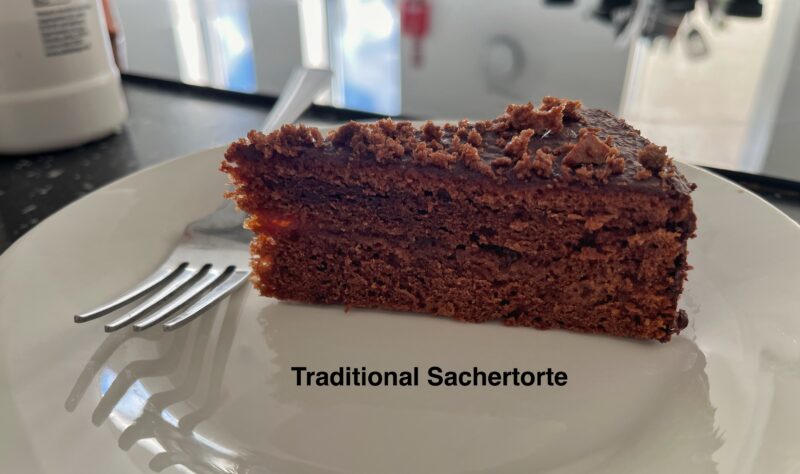
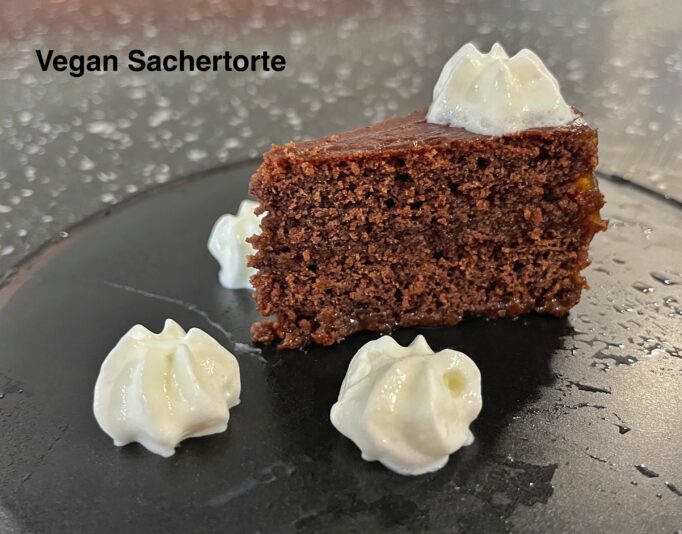
Ahora mismo estoy dedicando un poco de tiempo a investigar sobre la harina de garbanzos. Como comparación, he preparado una tarta Sacher siguiendo la receta tradicional, y creo que se nota mucho que la miga tiene un aspecto diferente (la de la tarta de garbanzos parece más granulosa a simple vista). Tengo algunas hipótesis sobre las razones de esto, pero he pensado en preguntar si alguien tiene alguna idea de a qué puede deberse. (Creo que sería bueno preguntar antes de compartir mis propias ideas, ya que quizá algunos tengáis en mente cosas en las que yo no había pensado). 😊 Además, me gustaría añadir que esta pregunta surge más bien por curiosidad y no afecta realmente a lo que estoy preparando para el reto, ¡así que no dudéis en compartir vuestras opiniones al respecto! 😃)
I am currently spending time on researching chickpea flour a little. As a control, I have made a Sachertorte in the traditional way, and I think it is very visible that the crumb looks different (as in more grainy for the looks of it for the chickpea cake). I am having some hypotheses about the reasons for this – but thought I’ll ask if anybody has ideas about why this may be? (I reckon it could be good to ask before I share my own thoughts, as some may have things in mind that I had not thought of! 😊 Also I’d like to add that this question is more out of curiosity, and doesn’t quite affect what I am working on for the challenge, so feel free to share views there! 😃)
 Traducido del inglés
 Lyubomira Tuykova Tuykova, Mercedes Delgado de Miguel y5 más4 Comentarios
-
¿Tamizaste la harina? ¿Es harina molida por ti o comprada? Puede que muchas partículas queden y cueste que se hidrate correctamente. Queda medio gelatinizado mientras la parte más fibrosa no. Yo diría que, al hidratarlo, lo dejes un ratito más, para darle tiempo a todos los granulitos a que se hidraten. ¿Tu harina tiene parte de la cascara o piel de los garbanzos? Probá tostando los garbanzos un poquito antes de hacer la harina, o de tostar apenas la harina antes de hacer la torta. Eso le dará mejor sabor, aunque ojo porque los almidones necesitarán un poquito más de humedad y los almidones se comportarán un poquito diferente. PERO VALE LA PENA. Le dará un nutty flavor a los garbanzos. Ahora contame lo que pensaste vos a ver si estamos “flotando en la misma sintonía ” jaja.
-
Level:
 Scoolinary Team
¡Qué interesante este experimento, Réka! Me encanta que hayas preparado ambas versiones para comparar resultados. En las fotos se aprecia esa diferencia en la miga que comentas. Laura ha planteado puntos muy interesantes sobre la granulometría y la hidratación. Yo añadiría que la ausencia de gluten y la diferente composición de proteínas y almidones del garbanzo también pueden influir en la estructura. Sería interesante probar una hidratación más prolongada manteniendo las demás variables constantes.
Y ahora tengo curiosidad por conocer tus hipótesis. ¿Coinciden con lo que hemos comentado o has observado algo diferente durante la elaboración? 😊
1 -
¡Hola, Laura y Sol! @laupet2000gmail-com @soldamiani
Sí, yo también pienso lo mismo que vosotros. He tamizado la harina, es de compra, y no parece contener partículas de cáscara ni nada por el estilo; de hecho, se vende como «superfina» y tiene ese aspecto, como si fuera harina normal. Durante el proceso, no he visto al menos ningún rastro visible de que la harina no se hidratara bien y la he ido añadiendo poco a poco; así que añadí una pequeña porción y mezclé hasta que no quedaran grumos, y luego continué hasta que toda la harina estuviera incorporada (Puede que incluso haya sido demasiado precavido en este punto, ya que la parte líquida de la receta parecía inesperadamente abundante, ya que, al parecer, esta harina absorbe mucha más agua que la harina normal). No estoy seguro de que esto haya funcionado al 100 %, pero supongo que, al menos, intenté evitar una mala hidratación, ya que la harina en polvo parece más propensa a apelmazarse. Además, dejé reposar la masa durante al menos 20 minutos antes de hornear, pero no estoy segura de que eso por sí solo sirva de algo. (Si tenéis alguna idea más sobre qué podría haber hecho de otra manera, o si creéis que alguna de las precauciones parece insuficiente, ¡todas las sugerencias son bienvenidas!! :)) Por desgracia, en las fichas técnicas solo encontré especificaciones nutricionales y que se trata de un producto mínimamente modificado (así que, probablemente, si quiero saber más sobre el proceso, etc., debería hablar con el fabricante o algo así).
Mi hipótesis al respecto tenía que ver tanto con el tamaño de las partículas como con la composición del almidón, así que, básicamente, lo primero que empecé a investigar fue qué tipos de almidón eran, qué tamaño tenían sus gránulos en estado no hidratado e hidratado, y qué estructura se forma una vez que se gelatinizan en el horno. A veces pienso que incluso el tamaño de los gránulos (si son grandes) puede dar lugar a una estructura y una sensación en boca granuladas, así que empecé por comparar esto entre las dos harinas, y luego también los tamaños tras la hidratación y el mecanismo de gelatinización en el horno.
He podido encontrar algunos datos que indican que, en general, el tamaño de los gránulos es mayor en los almidones de la harina de garbanzos que tenía. Sin duda, esto puede ser un factor que contribuya a la diferencia de textura. Hay otra cosa que me parece interesante: los almidones de garbanzo tienen una mayor proporción de amilosa que se libera parcialmente de los gránulos, formando una textura gelatinosa al calentarse, pero, a nivel local, la amilopectina restante también puede contribuir a la formación de partículas más grandes. Además, esta harina contiene tipos de proteínas que, según algunos experimentos, no se integran tanto en la estructura como las proteínas del huevo al elaborar un bizcocho aireado, ya que, al parecer, el huevo ofrece más posibilidades de formar enlaces disulfuro y otras interacciones que facilitan su integración y aumentan la cohesión. Al parecer, esto también es un factor importante en los productos a base de garbanzos, y se observan los gránulos resultantes de la falta de integración y la agregación de las proteínas al microscopio electrónico. También hay un factor ajeno a la harina: el bizcocho vegano contiene mantequilla de almendra «suave», pero incluso esta contiene partículas enteras de tamaño bastante grande, por lo que también pueden influir en el resultado final. Supongo que, dado que, por desgracia, no dispongo de equipo de química experimental para realizar experimentos a este nivel, es difícil determinar con total certeza cuál es el culpable o qué combinación de factores lo es. Además, lamentablemente, algunos de los datos de los artículos científicos dicen cosas muy diferentes (y también sabemos que tener una composición distinta a la de la harina —azúcares, etc.— también alterará el comportamiento de los ingredientes estructurales en la repostería), así que solo estoy barajando estas posibles explicaciones. Por supuesto, esto tampoco descarta que no estuviera hidratando correctamente, pero al parecer hay un estudio que afirma que, incluso tras horas de hidratación y calentamiento lento en ciertos tipos de harina de garbanzos, la hidratación completa puede resultar complicada, así que quizá la estructura de los gránulos ya sea, de por sí, un factor que contribuya al problema.
Y en cuanto al tostado de los garbanzos, tengo un plan secreto al respecto porque quiero que mi propuesta sea «cero residuos», y voy a utilizar esta técnica para uno de los componentes (pero no para la harina, para aportar algo de variedad :)).
Perdón por la respuesta tan larga, pero pensé que podría contener información interesante; ¡la verdad es que me sorprendió bastante encontrar tantos artículos científicos que son, en cierto modo, relevantes e interesantes!
Hi Laura and Sol! @laupet2000gmail-com @soldamiani
Yes, my thoughts are also pointing in the same direction as yours. I have sifted, the flour is store-bought, and doesn’t appear to contain any particles from skins, etc, and even is sold as super-fine and it does appear superfine, like it were normal flour. In the process, I haven’t seen at least any visible traces of the flour not getting well-hydrated and added gradually all the flour, so I added a small portion and mixed until no lumps, and then continued until all flour was in (I may have as well been overly careful there because the liquid part of the recipe was visually unexpectedly large as this flour apparently takes a lot more water than normal flour). Not sure this was 100% successful but I suppose I at least tried not to end up with a bad hydration as the flour powder appears to be more prone to stick. Also it was sitting after a while before baking for at least 20 mins, but not sure that in itself helps. (If you have any further ideas about what I could have done differently, or if you think any of the precautions sound insufficient, all suggestions are very welcome there!! :)) Sadly, I only found nutritional specifications and that it is minimally modified product in the technical sheets (so probably if I want to know more about the process, etc, I should talk to the manufacturer or something).
My take on this was both related to particle size and starch composition, so basically what I started to look up right away was what the starches are, how big their granules are non-hydrated/hydrated and what structure it builds once it gelatinises in the oven. Sometimes I think even granule sizes (if they are big) can give a grainy structure and mouthfeel, so I sort of started by checking this between the two flours, and then also the hydrated sizes, and mechanism of gelatinisation in the oven.
I could dig out some numbers that say that the granule sizes are larger in general for the starches in the chickpea flour I had. This can definitely be a contributing factor in the different texture. There is also another thing that I find interesting: the chickpea starches have a larger proportion of amylose that get out of the granules partially, forming a gel texture upon heating, but then locally the remaining amylopectin also can contribute to larger particle bits. There are also types of protein in this flour that according to some experiments, don’t incorporate as much to the framework as the egg proteins do when doing an aerated cake, because the egg apparently has more possibilities for disulphide bonds and some other interactions that makes its integration smoother and adds to cohesion. Apparently this is also a big thing in chickpea-based products and they see the grains coming from the protein non-integration and aggregation on an electron microscope. There is also a non-flour factor – the vegan cake contains ‘smooth’ almond butter but even these have full particles of quite large sizes, so these also can influence the end result. I suppose given that I unfortunately don’t have experimental chemistry equipment to do experiments on this level, it is hard to tell entirely, exactly which one is the culprit or what combination of them is. Also sadly some of the data in papers say very different things (and we also know that having a different composition apart from the flour – sugars, etc – will also alter the behaviour of the structural ingredients in baking), so I am just guessing these are possible explanations. This of course also doesn’t rule out that I was not properly hydrating, but there is apparently a study that says that even with hours of hydration and slow heating in certain types of chickpea flour, full hydration can be challenging, so perhaps it can be a component of the problem by virtue of granule structure already.
And as for the chickpea roasting, I have a secret plan there because I wanna go no-waste with my entry, and I am going to use this technique for one of the components (but not the flour to show some variation :)).
Sorry for the long reply, thought there may be interesting information in this – I certainly was quite surprised to find so many scientific papers that are sort of relevant and interesting!
1hace 2 semanasTraducido del inglés
-
@rekahorvathr-e2c3b8 ME HA ENCANTADO TU RESPUESTA 🙂
@rekahorvathr-e2c3b8 I LOVED YOU ANSWER 🙂
1hace 2 semanasTraducido del inglés
-
-