-

Kevin Godbee ha publicado una actualización
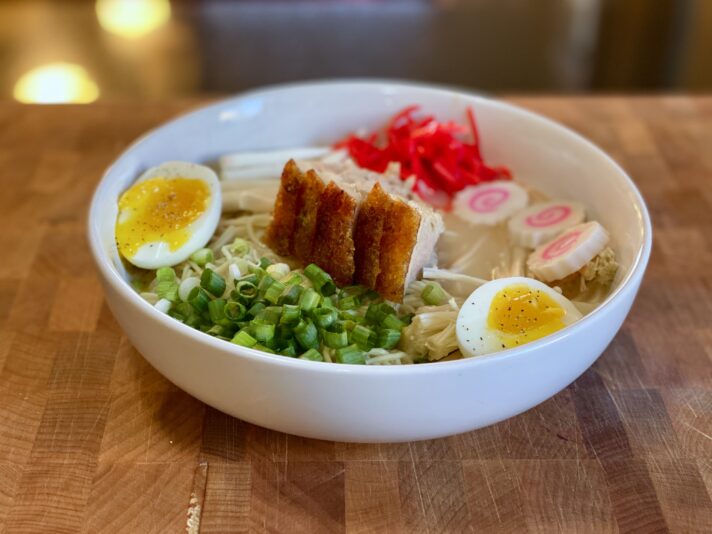
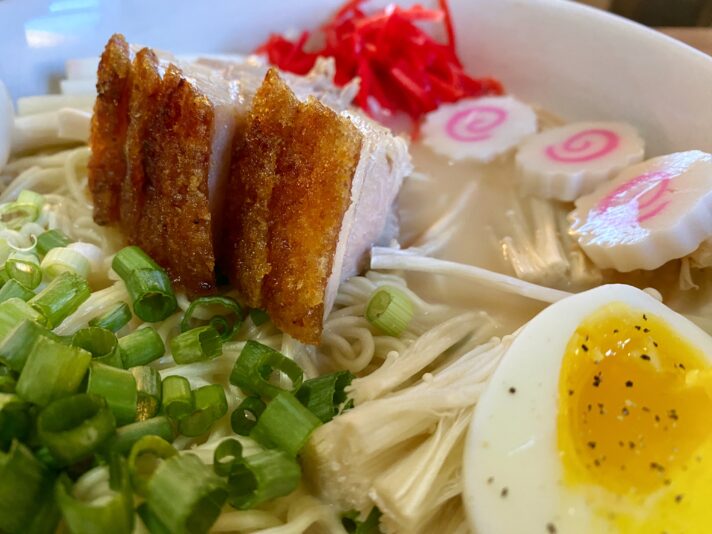
Tonkotsu Ramen con panceta de cerdo asada, Sun Noodle® Fresh Ramen Noodles, setas de nieve, setas enoki, pastel de pescado narutomaki, kizami shoga, huevos confitados, cebolletas.
Datos interesantes que aprendí en mi reciente curso de ramen:
1. Los fideos ramen son alcalinos y tienen una hidratación muy baja, del 32-37%. La harina de trigo para los fideos tiene un nivel generalmente alto de proteínas del 12% – similar a la harina de pan que utilizo para la pizza que es del 12,7%. Los fideos Hakata de este Tonkotsu Ramen tienen una hidratación aún más baja, del 30%, que sólo puede hacerse a máquina. La marca Sun Noodle que utilicé es la misma que emplean muchas tiendas de ramen. Para que una tienda de ramen pudiera permitirse la máquina para este tipo de fideos tendría que vender al menos 500 cuencos al día.
2. Los huesos de cerdo para hacer el caldo tienen que remojarse durante 6 horas y luego cocerse de 8 a 10 horas, y hasta 18 horas en algunas cocinas de restaurantes.
3. John Husby, chef y copropietario de Chuka Ramen Bar dice que el primer turno de preparación en su tienda de ramen empieza a las 4:30 de la mañana. Tras el proceso de elaboración de los fideos y el caldo, hay que preparar las proteínas. En el caso del cerdo, son varias horas más.
Tonkotsu Ramen with roasted pork belly, Sun Noodle® Fresh Ramen Noodles, snow mushrooms, enoki mushrooms, narutomaki fishcake, kizami shoga, jammy eggs, scallions.
Interesting facts that I learned in my recent ramen course:
1. Ramen noodles are alkaline and very low hydration of 32-37%. The wheat flour for the noodles has a generally high protein level of 12% – similar to the bread flour I use for pizza which is 12.7%. The Hakata noodles in this Tonkotsu Ramen are an even lower hydration of 30%, which can only be made by machine. The Sun Noodle brand I used is the same used by many ramen shops. For a ramen shop to be able to afford the machine for these type of noodles they would have to sell at least 500 bowls a day.
2. The pork bones to make the broth have to soak for 6 hours and then cook for 8-10 hours, and as much as 18 hours in some restaurant kitchens.
3. John Husby, Chef and Co-owner of Chuka Ramen Bar says that the first prep shift in his ramen shop starts at 4:30 am. After the process of making the noodles and broth, then the proteins need to be prepared. In the case of pork, that’s another several hours.
 Traducido del inglés
 Mercedes Delgado de Miguel, edinsoncristianarevalolopez y3 más4 Comentarios
-
 Level:
 Sous Chef
That bowl is a masterpiece 😍 Honestly, worth every minute of prep.
1-
@lanamihajlovic Thanks Lana!
1
-
-
Level:
Scoolinary Team
Wow Kevin, your Tonkotsu Ramen looks absolutely incredible – both technically and visually! The chashu has the perfect crisp, the eggs are beautifully jammy, and the bowl presentation is balanced and vibrant. 🙌
It’s also fantastic to see how much you’ve absorbed from the course — those are key insights that reflect a deep respect for the craft behind ramen. Your enthusiasm and attention to detail really come through.
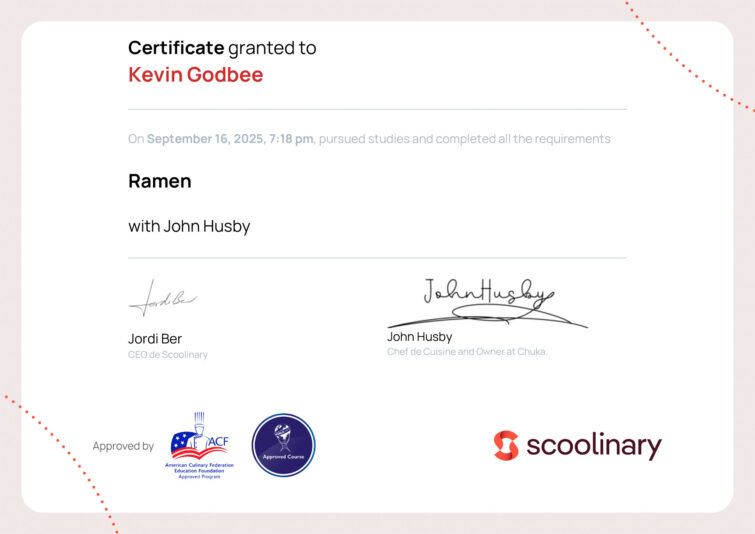
Huge congrats on earning your certificate 🥳 We’re so happy to be part of your culinary journey! Keep sharing your delicious creations! 🍜✨
1-
@soldamiani Thank you, Sol!
-
-