-

Kevin Godbee ha publicado una actualización
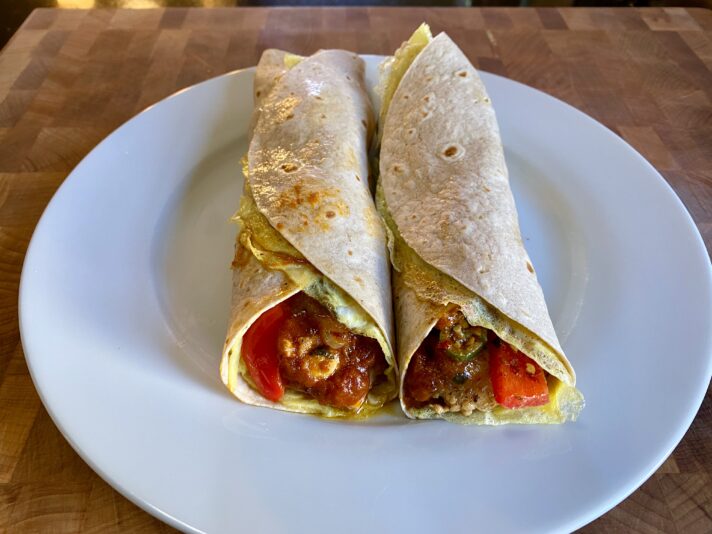
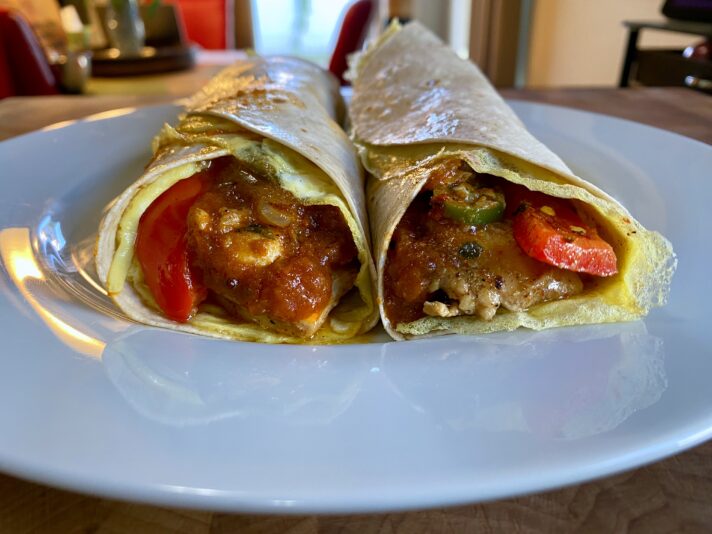
Rollos Kathi con Pollo y Huevo. Salsas Achaar de Tomate y Chutney de Mango.
#indianfoodthatisntcurry
Mis dos compañeros de cena dijeron que estaban tan buenos que se antojan.
Los Kathi o Kati rolls fueron inventados por el restaurante Nizam en Calcuta, Bengala Occidental, en 1932. La historia cuenta que en la Calcuta colonial, a los funcionarios británicos que se desplazaban al distrito comercial de Dalhousie Square les resultaba difícil y engorroso comer kebabs con las manos.
Así que los cocineros del restaurante Nizam’s envolvieron los kebabs a la parrilla en una paratha y luego en papel encerado para crear una comida portátil para comer sobre la marcha. La idea tuvo un éxito inmediato y el plato se extendió rápidamente más allá del restaurante. El nombre “Kathi Roll” – El término “Kathi” procede de la palabra bengalí para “palo” o “pincho”, que se utilizaba para preparar los kebabs antes de sacar la carne del palo y envolverla.
Pronto se convirtieron en una comida popular de los vendedores callejeros y siguen siéndolo hoy en día.
Kathi Rolls with Chicken & Egg. Tomato Achaar and Mango Chutney sauces.
#indianfoodthatisntcurry
My two dining companions said that these were so good that they are craveable.
Kathi or Kati rolls were invented by Nizam’s Restaurant in Kolkata, West Bengal in 1932. The story goes that in colonial Kolkata (Calcutta), British officials commuting to the Dalhousie Square business district found it difficult and messy to eat kebabs with their hands while on the go.
So the cooks at Nizam’s restaurant wrapped the grilled kebabs in a paratha and then in wax paper to create a portable, eat-on-the-go meal. The idea was an immediate success, and the dish quickly spread beyond the restaurant. The Name “Kathi Roll” – The term “Kathi” comes from the Bengali word for “stick” or “skewer,” which was used to prepare the kebabs before they took the meat off the stick and wrapped it.
They soon became a popular street vender food and remain so to this day.
 Traducido del inglés
 Mercedes Delgado de Miguel, Maloles Muñoz y5 más12 Comentarios
-
 Level:
 Scoolinary Team
I love how you didn’t just share the rolls but also the story behind the dish that adds even more flavor to your post 👌. Kathi rolls are already irresistible, and with those sauces they must have been finger-licking good. No wonder your dinner guests loved them, I’m craving some myself just from reading this! ☺️
1-
@sussan_scoolinaryteam Thank you!
-
-
Thank you for the information on the origins of this dish.
1-
@judyrusselllive-com-au You’re welcome!
-
-
Level:
Executive Chef
Me encantan
1-
@mercedesminayapalaciosgmail-com ¡Gracias!
@mercedesminayapalaciosgmail-com Gracias!
hace al añoTraducido del inglés
-
Level:
Executive Chef
@kevin-godbee la historia bien relacionada es muy bonita, gracias por haberla compartido
1
-
-
-
Level:
Sous Chef
Es una participación fantástica, tanto el plato como la historia que hay detrás. Me encanta cómo lo has relacionado con la historia. Es increíble pensar que algo creado por comodidad para los atareados funcionarios coloniales se convirtiera en una de las comidas callejeras más queridas de la India.
Level:
Sous Chef
This is such a fantastic share, both the dish and the story behind it. I love how you tied in the bit of history too. It’s wild to think that something created out of convenience for busy colonial officials became one of India’s most beloved street foods.
1hace al añoTraducido del inglés
-
@lanamihajlovic Thank you!
-
@lanamihajlovic Thank you!
-
-
Level:
Executive Chef
Exquisito plato. Un plato con historia.
1-
@cecu6669hotmail-com Thank you!
-
-