-


Marianela Solis posted an update in the club
7 weeks ago Lab
Sourdough Croissant
Recipe by Daniel Álvarez, adapted by me to use sourdough starterSourdough croissant
Receta de Daniel Álvarez y adaptada por mi para que sea con masa madre Translated from Spanish
 Marianela Solis, Lyubomira Tuykova Tuykova and 11 others7 Comments
-
Level:
 Stagier
que bien, se ve la técnica presente
-
Level:
Executive Chef
Se ven estupendos.
-
Level:
Scoolinary Team
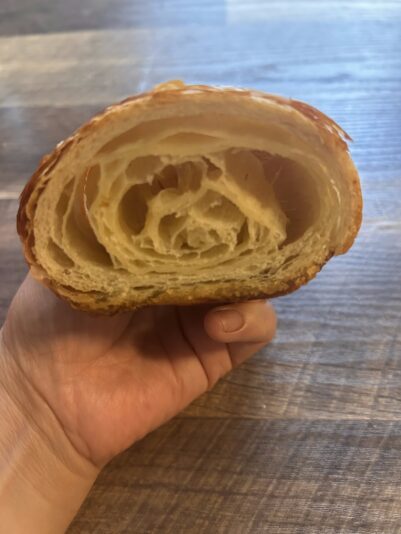
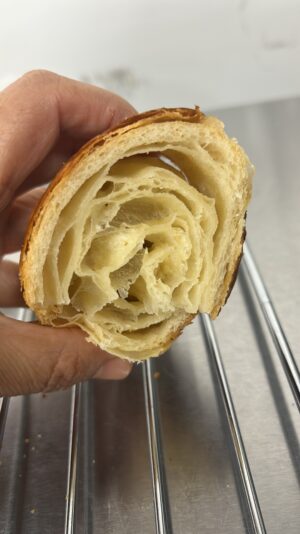
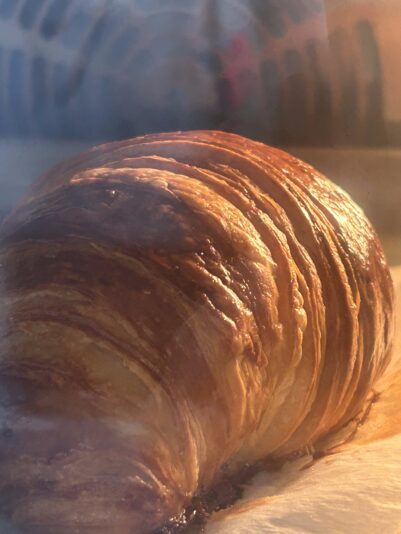
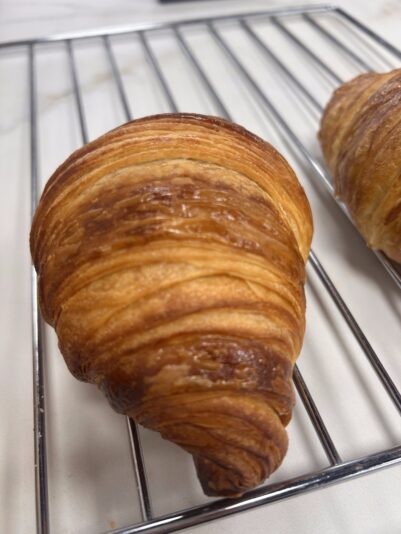
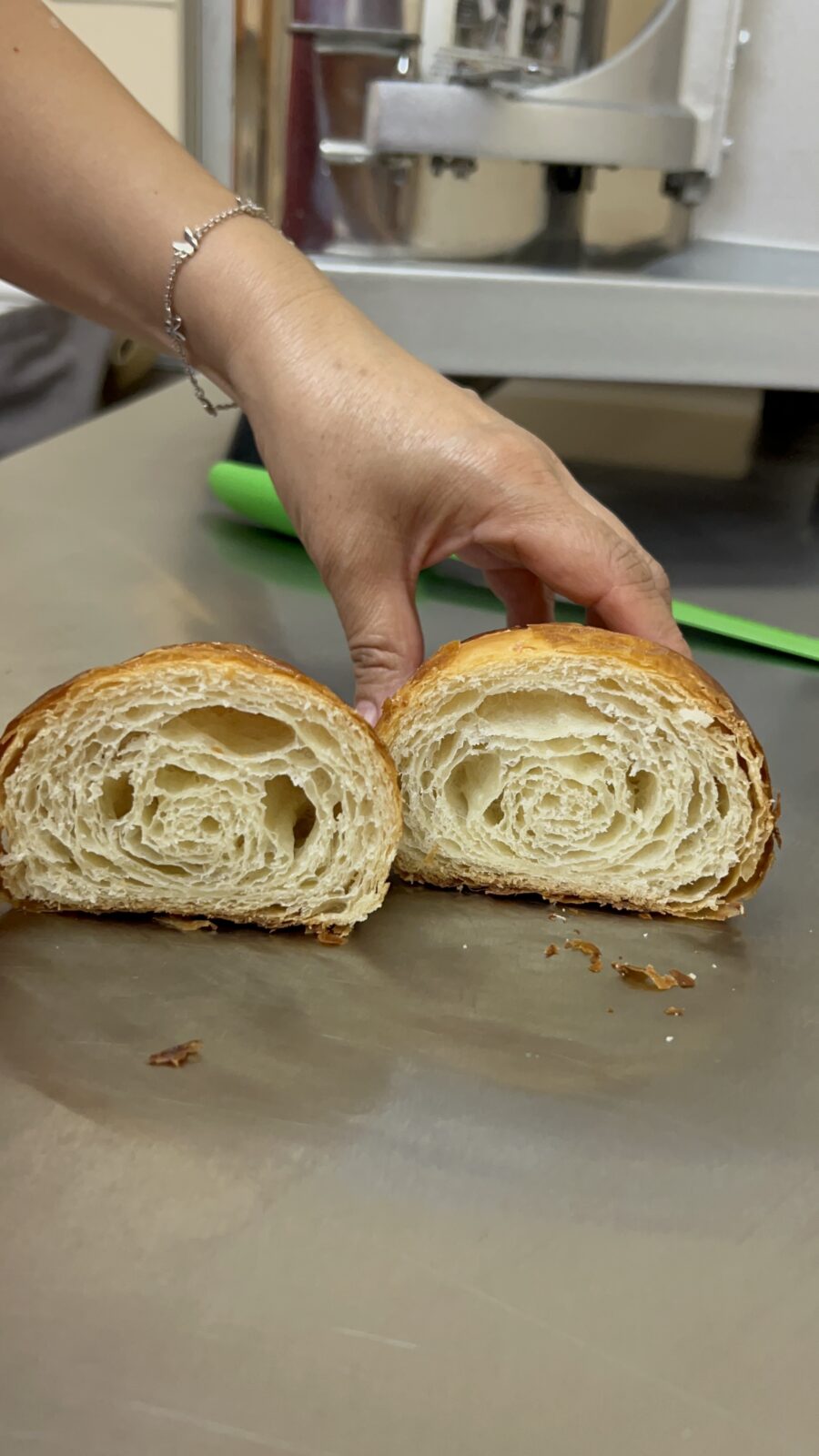
¡Muy buen experimento para el Club LAB, Marianela! Adaptar una fórmula de Daniel Álvarez a masa madre ya implica tomar decisiones sobre fermentación, fuerza de la masa y tiempos de frío, no solo sustituir la levadura. En las fotos se aprecia un laminado bien marcado y una expansión potente; en el interior aparecen alveolos grandes, aunque algo irregulares y con zonas más compactas en la base y el centro.
Para la siguiente prueba, podrías mantener todo igual y modificar solo la fermentación final, observando cuánto cambia la apertura de las capas y la regularidad del alveolado. ¿Qué porcentaje de masa madre usaste y cómo ajustaste los tiempos respecto a la receta original? Ahí puede estar una pista muy interesante para afinar tu versión.
Y cuéntanos también cómo quedó de sabor: acidez, mantequilla, aroma y equilibrio general.¡Felicitaciones!
-
Agradezco mucho las felicitaciones y también la recomendación, sabes que si esta es mi tercera prueba y es la fermentación final he ido revisando los detalles y mientras más tiempo dejo fermentar mejor es el resultado en este punto funciona totalmente diferente a una levadura pero a la vez es lindo no rendirte y saber que estoy llegando al resultado que deseo, hoy estaré haciendo más y volveré a subir las fotos el objetivo es seguir trabando y ofrecer productos difebretes y en tendencia
-
Level:
Scoolinary Team
@marianela-solis4400 Marianela, it’s great to read this, because you’re already finding your own answers with each attempt. And it’s clear that you’re not just settling for “getting it to work”—you’re observing what changes and why. If you make them again today, pay special attention to how the dough behaves at the end of fermentation: how much it rises, how it feels to the touch, and how it responds in the oven. That will help you recognize the right moment without relying solely on the clock. And thinking about that goal of offering something different, I find this very interesting: what would you like to set your sourdough croissants apart—the flavor, the texture, the air pockets, or a little bit of everything? We’re looking forward to those new photos 😊
Level:
Scoolinary Team
@marianela-solis4400 Marianela, qué bueno leer esto, porque ya estás encontrando tus propias respuestas con cada prueba. Y se nota que no te estás conformando con “que salga”, sino que estás observando qué cambia y por qué.
Si hoy vuelves a hacerlos, fíjate especialmente en cómo se comporta la pieza al final de la fermentación: cuánto crece, cómo se siente al tacto y cómo responde luego en el horno. Eso te va a ayudar a reconocer el punto sin depender solo del reloj.
Y pensando en ese objetivo de ofrecer algo diferente, me parece muy interesante: ¿qué te gustaría que distinguiera a tus croissants de masa madre, el sabor, la textura, el alveolado, o un poco de todo? Esperamos esas nuevas fotos 😊7 weeks agoTranslated from Spanish
-
-
I’ll do it, just watch.
Está lo logre mira
6 weeks agoTranslated from Spanish
-
Level:
Scoolinary Team
@marianela-solis4400 How interesting to see the inside of this laminate! 👏 You can see well-defined layers, a beautiful grain pattern, and a golden sapwood. Also, notice the difference between the two halves: one has larger, more irregular air pockets, while the other has a more uniform structure. There’s a lot to analyze here!
Have you noticed any differences in the texture or lightness of each piece? It would be interesting to examine how shaping and fermentation influenced the result. With this type of dough, understanding what happens at each stage is key to achieving an increasingly consistent laminated dough. Great job—keep experimenting! 🥐Level:
Scoolinary Team
@marianela-solis4400 ¡Qué interesante ver el interior de este laminado! 👏 Se aprecian capas bien definidas, un bonito desarrollo y una corteza dorada. Además, fíjate en la diferencia entre ambas mitades: una tiene alveolos más grandes e irregulares, mientras que la otra presenta una estructura más uniforme. ¡Ahí hay mucho que analizar!
¿Has notado diferencias en la textura o la ligereza de cada pieza? Sería interesante revisar cómo influyeron el formado y la fermentación en el resultado. En este tipo de masas, entender qué ocurre en cada etapa es clave para conseguir un laminado cada vez más regular. ¡Buen trabajo, sigue experimentando! 🥐5 weeks agoTranslated from Spanish
-
-
-