-

Maloles Muñoz to Sol Damiani, David Torres del Castillo and Sussan Estela Olaya
2 years ago (edited)
Level: Executive Chef
Infused / Aromatized Oils
The other day @soldamiani invited me and other students to the thread opened by our colleague @davidtorresdc on this topic. When I saw it it was very late and I was leaving for a trip first thing in the morning. I told David that I would make a post to share my notes and here I am.
First of all I think you should take a look at this blog post https://blog.scoolinary.com/haz-en-casa-tu-propio-aceite-infusionado-con-hierbas-y-especias It was already shared by @sussan_scoolinaryteam along with a course on Extra Virgin Olive Oil: Variety and Technique for Every Dish
Let’s get to it…
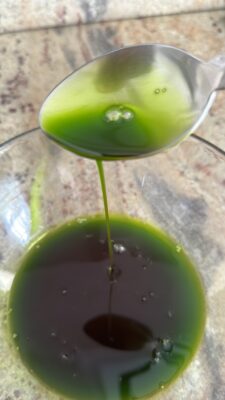
The parsley oil I make is from the Plating Techniques course which I take this opportunity to recommend because it is fantastic.
I put less herbs because I thought it was too much and it comes out well. But if someone does it with the same amount, I would be grateful if you could tell me the result.
The original recipe is this
100 gr Green aromatic herbs (parsley, chives, basil…)
100 gr Cold oil ( better a neutral oil, I use sunflower oil)
Salt
Preparation
- Bring a saucepan of salted water to boil.
- Blanch the herbs in the water for 20-30 seconds and immediately refresh them in ice water for 5 minutes so that they keep their color.
- Dry the herbs very well, removing all residual water.
- Grind the herbs with the oil for 5 minutes at high speed (making sure the oil cools down to counteract the heat produced by the blender)
- Strain the mixture through a coffee filter or muslin cloth. Refrigerate until use (I leave it for 12 hours)
Other techniques
And these I learned in the school of Master Chef , cookbooks, from Joan Roca of molecular cuisine, and different recognized chefs that I follow on YouTube and as you will see they are different.
Garlic oil:
We split a head of garlic in half and confit it in oil at low temperature. We remove and leave to temper, covering with cling film.
Nut oil:
Fry the pine nuts in plenty of oil until golden brown. Leave to cool and cover with plastic wrap to rest.
Charcoal oil:
Put aluminum foil in a saucepan and heat it with a blowtorch until it becomes incandescent. With tongs we place it in a bowl full of oil. To prevent the oil from igniting, we film the bowl so that it runs out of oxygen.
Citronella: we must cut the citronella and vacuum pack it before applying a cooking of about 70 ° for about 12 hours
Chilli oil:
In a saucepan we put to confit 3 chilli peppers with 100gr of extra virgin olive oil at 65º for 3 hours
When cold
Thyme oil:
50g of aove, 1 sprig of thyme, salt and pepper. Chop the thyme with a knife, mix with the oil, salt and pepper.
I remember the first time I made thyme oil, rosemary ..I’m looking for a little video I made then and I’ll share it with you right away😉.
I hope it will be helpful to you. If I forgot something, I will edit again
Level:
Executive Chef
Aceites Infusionados / Aromatizados
El otro día @soldamiani me invitaba junto a otros alumnos al hilo que abrió nuestro compañero @davidtorresdc sobre este tema. Cuando lo vi era muy tarde y salía de viaje a primera hora de la mañana. Le dije a David que haría un post para compartir mis notas y aquí estoy.
Antes de nada creo que deberíais mirar este articulo del blog https://blog.scoolinary.com/haz-en-casa-tu-propio-aceite-infusionado-con-hierbas-y-especias Ya lo compartió @sussan_scoolinaryteam junto a un curso de Aceite de Oliva Virgen Extra: Variedad y Técnica para Cada Plato
Vamos a ello..
El aceite de perejil que hago es del curso Técnicas de emplatado que aprovecho para recomendarlo porque es fantástico.
Yo pongo menos hierbas porque me parecía mucho y sale bien. Pero si alguno lo hace con igual cantidad le agradecería que diga el resultado.
La receta original es esta
100 gr Hierbas aromáticas verdes ( perejil, cebollino, albahaca..)
100 gr Aceite frío ( mejor un aceite neutro, yo utilizo aceite de girasol)
Sal
Preparación
- Poner a hervir una cacerola con agua salada.
- Blanquear las hierbas en el agua durante 20-30 segundos e inmediatamente refrescarlas en agua helada durante 5 minutos para que conserven el color.
- Secar las hierbas muy bien, eliminar toda el agua residual.
- Triturar las hierbas con el aceite durante 5 minutos a alta velocidad (asegurándose de que el aceite se enfríe para contrarrestar el calor que produce la licuadora)
- Pasar la mezcla por un filtro de café o una tela de muselina. Refrigerar hasta su uso. ( yo lo dejo 12 h )
Otras técnicas
Y estas aprendí en la escuela de Master Chef , libros de cocina, de Joan Roca de cocina molecular, y diferentes chef reconocidos que sigo por YouTube y que como veréis son distintas.
Aceite de ajo:
Partimos una cabeza de ajos por la mitad y la confitamos en aceite a baja temperatura. Retiramos y dejamos atemperar, cubriendo con papel film.
Aceite de frutos secos:
Freímos los piñones en abundante aceite hasta que estén dorados. Dejamos atemperar y filmamos para que repose.
Aceite de carbón:
En un cazo ponemos papel de aluminio y lo calentamos con soplete hasta que se ponga incandescente. Con unas pinzas lo colocamos en un bol lleno de aceite. Para evitar que el aceite se inflame, filmamos el bol para que se quede sin oxígeno.
Citronela: debemos cortar la citronela y envasarla al vacío antes de aplicarle una cocción de unos 70º durante unas 12 horas
Aceite de guindilla:
En un cazo ponemos a confitar 3 guindillas con 100gr de aceite de oliva virgen extra a 65º durante 3 horas
En frío
Aceite de tomillo:
50g de aove, 1 rama de tomillo, sal y pimienta. Picamos el tomillo con cuchillo, mezclamos con el aceite, la sal y la pimienta.
Recuerdo que la primera vez que hice aceite de tomillo, romero ..busco un pequeño video que hice entonces y os lo comparto en seguida😉
Espero que os sirva de ayuda. Si me he olvidado algo, volveré a editar
 Translated from Spanish
 Sol Damiani, Diana Vinces and 2 others10 Comments
-
 Level:
Scoolinary Team
Gracias Maloles por compartir tus conocimientos.
Sabemos que será de mucha ayuda para David
2-
Level:
Executive Chef
@sussan_scoolinaryteam gracias a ti también porque yo no conocía el curso sobre aceites de María José y con tu propuesta ya lo tengo en marcha . Al final creo que compartir algo más que nuestros platos es de gran ayuda para todos 😉
-
Level:
Scoolinary Team
@loles-mhotmail-com me alegra saber eso,ya quiero ver el resultado del curso de María José. Siempre me hace ilusion ver tus resultados.🫶🏻
-
Level:
Executive Chef
@sussan_scoolinaryteam Vaya! Eso es un honor para mi . Apenas empezado pero conforme vaya avanzado en el ya veré . Seguro que algo hago . Los cursos de María José son especiales 🥰😍
-
-
-
-
Muchas gracias!! Que pasada de publicación 🫶
1-
Level:
Executive Chef
@davidtorresdc Espero que te sirva. Alguno de ellos no lo he probado pero ahí está guardado.Me parece que me he dejado alguno , cuando pueda repaso mis notas y edito el post de nuevo. Si descubres algo más por tu cuenta por favor . compártelo porque me interesa mucho este tema 😉
1
-
-
Level:
Stagier
Es súper ver las técnicas que se pueden utilizar y una maravilla para la creación de diferentes platos. Muchas gracias por compartir @malolesmuñoz 🤗
1-
Level:
Executive Chef
@dianavincescgmail-com De nada ! Es un placer compartir😉
-
-
Level:
Scoolinary Team
🏆🏆🏆 Rompes el molde 24/7, @loles-mhotmail-com
1-
Level:
Executive Chef
@soldamiani No vi tu comentario . Mil gracias siempre Sol por ser tan especial 🥰🤗
-