-

Maloles Muñoz posted an update
a week ago (edited)
Level: Executive Chef
#globalbeanchallenge
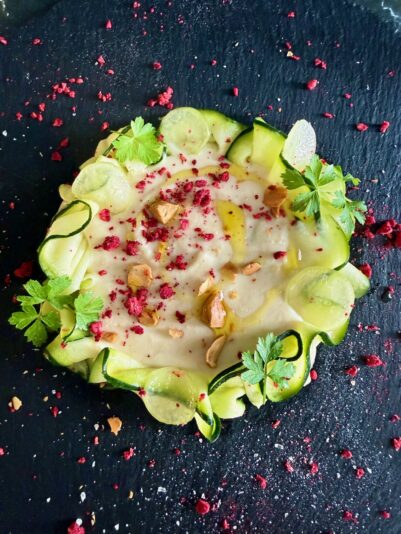
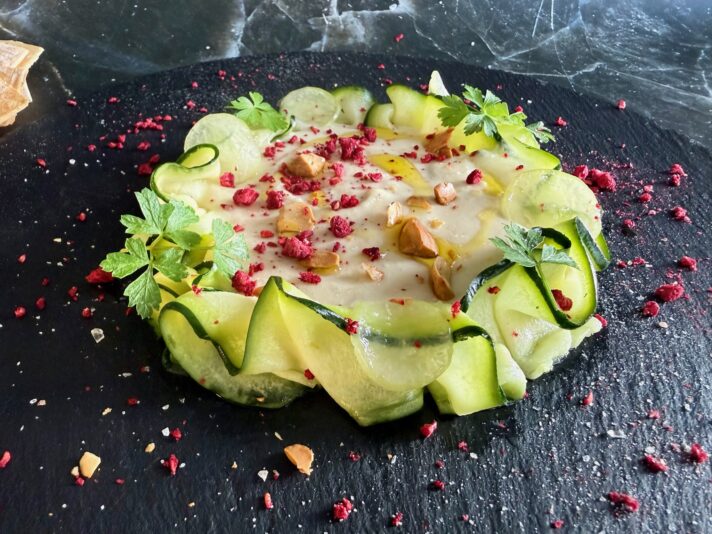
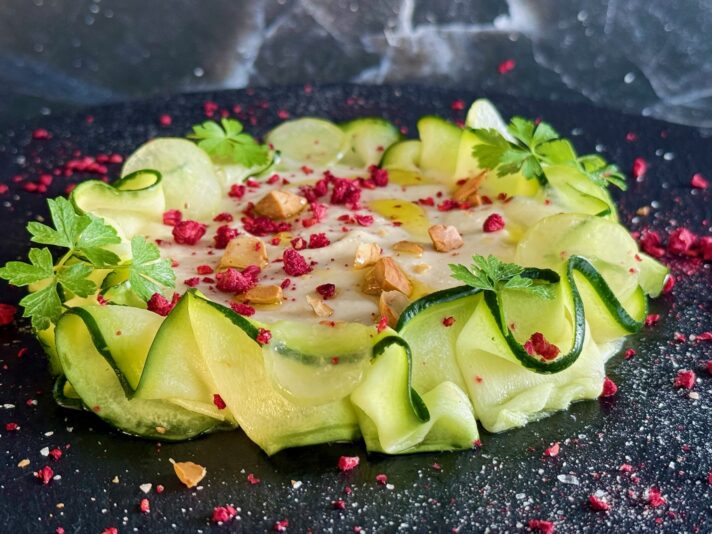
White Alchemy: Ajoblanco with beans and silk.
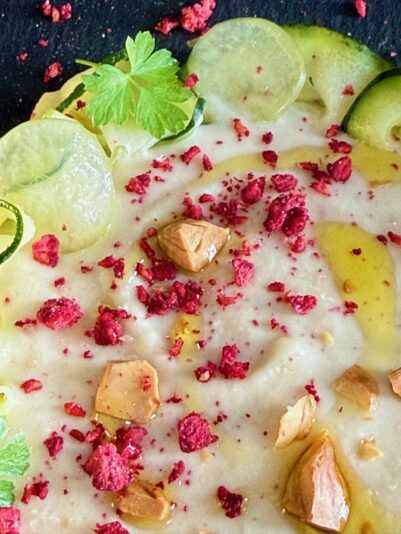
Is it possible to reinvent a dish with centuries of history without losing its soul? As an Andalusian—and a true native of Jaén—I know that tradition isn’t trampled upon; it evolves. Today I present “White Alchemy,” a reinterpretation of our traditional ajoblanco that swaps soup for silk, bread for white beans, and the classic grape for the contrast of freeze-dried raspberries. Although I did want the grape to be present in the form of a few small slices.
But the true backbone of this recipe—the element that bridges the avant-garde with my roots—is our Picual variety Extra Virgin Olive Oil.
In this dish, the Picual isn’t just an ingredient—it’s the driving force that emulsifies the beans until they achieve a dense, creamy texture. And, in terms of flavor, its potency, its green fruitiness, and that spiciness so characteristic of my homeland strike the perfect balance: they temper the intensity of the garlic and enhance the electric zing of the raspberry. It is, literally, Jaén on a plate.
Let me tell you about its origin and evolution:
Traditional Ajoblanco: The Origin
- It’s a recipe with humble origins. Ajoblanco is considered the “father of gazpacho.” It arose from the need of Andalusian farmers (especially in Málaga and Granada) to feed themselves with whatever they had on hand before tomatoes arrived from the Americas.
- Traditionally, it’s a cold, liquid soup made with four key ingredients: raw almonds, day-old bread (crumbs), garlic, extra virgin olive oil, and vinegar. Its texture is smooth and refreshing, designed to combat the summer heat.
- It is traditionally served in a soup bowl, garnished with green Muscat grapes or pieces of melon to balance the spiciness of the garlic with the sweetness of the fruit.
My Evolution: “White Alchemy”
This isn’t a random change, but a meaningful evolution:
- The change in texture: Instead of the classic soup meant to be eaten with a spoon, I sought a “chunky,” dense, and velvety texture, closer to a dip or spread (I served it with crystal bread).
- White Beans (Replacing the Bread): This is the recipe’s big secret. By removing the traditional bread crumbs and replacing them with cooked white beans, two things are achieved: it adds extreme creaminess without losing the pure white color, and it transforms the dish into a nutritionally richer option, providing plant-based protein and fiber, as well as making it naturally suitable for people with celiac disease (I have two family members with celiac disease, and I wanted to try this in preparation for the upcoming holidays.
- The Citrus Zucchini (An Evolution of the Garnish):
In classic ajoblanco, the garnish floats in the liquid. In my dish, because it has a firm base, the zucchini becomes a structure: a geometric crown. Dressed with lime and pepper, it adds freshness and a crunchy bite that cleanses the palate of the garlic’s intensity. - Freeze-Dried Raspberries (The 21st-Century Contrast):
It replaces the classic sweet grape. This adds a modern touch thanks to the freeze-drying technique, creates a striking visual color contrast (pink against black and white), and, above all, delivers a concentrated, electric acidity and a dry crunch that cuts through the creaminess of the beans.
In short, a cutting-edge dish rooted in the traditions of my homeland.
#globalbeanchallenge
Alquimia Blanca: Ajoblanco de alubia y seda.
¿Se puede renovar un plato con siglos de historia sin perder su alma? Como andaluza, y jiennense de pura cepa, sé que la tradición no se pisa, se evoluciona. Hoy os presento ‘Alquimia Blanca’, una reinterpretación de nuestro ajoblanco tradicional que cambia la sopa por la seda, el pan por la alubia blanca, y la clásica uva por el contraste de la frambuesa liofilizada. Aunque he querido que la uva esté presente en unas pequeñas rodajas.
Pero el verdadero esqueleto de esta receta, el que une la vanguardia con mis raíces, es nuestro Aceite de Oliva Virgen Extra de la variedad Picual.
En este plato, el Picual no es un simple ingrediente: es el motor mecánico que emulsiona la alubia hasta conseguir una textura densa y untuosa. Y, a nivel de sabor, su potencia, su frutado verde y ese picor tan característico de mi tierra son el equilibrio perfecto: cortan la intensidad del ajo y realzan el punto eléctrico de la frambuesa. Es, literalmente, Jaén en el plato.
Os cuento el origen y evolución:
Ajoblanco Tradicional: El Origen
- Es una receta de origen humilde. El ajoblanco es considerado el “padre del gazpacho”. Nació de la necesidad de los campesinos andaluces (especialmente en Málaga y Granada) de alimentarse con lo que tenían a mano antes de que el tomate llegara de América.
- Tradicionalmente es una sopa fría y líquida hecha con cuatro pilares: almendras crudas, pan del día anterior (miga), ajo, aceite de oliva virgen extra y vinagre. Su textura es fluida y refrescante, diseñada para combatir el calor del verano.
- Se sirve tradicionalmente en un cuenco sopero, decorado con uvas verdes de la variedad moscatel o trozos de melón para equilibrar el picante del ajo con el dulzor de la fruta.
Mi Evolución: “Alquimia Blanca”
No es un cambio al azar, sino una evolución con sentido:
- El cambio de textura: En lugar de la sopa clásica para tomar con cuchara, he buscado una textura “gordita”, densa y aterciopelada, más cercana a un dip o un untable ( lo serví con pan de cristal).
- La Alubia blanca (sustitución del pan): Este es el gran secreto de la receta. Al quitar la miga de pan tradicional y sustituirla por alubias blancas cocidas, se logran dos cosas: aportar una cremosidad extrema sin perder el color blanco puro, y transformar el plato en una opción nutricionalmente más rica, aportando proteína vegetal y fibra, además de hacerlo apto para celíacos de forma natural (tengo dos miembros celíacos en la familia y quería probar para las fechas que llegan.
- El calabacín cítrico (Evolución de la guarnición):
En el ajoblanco clásico la guarnición flota en el líquido. En mi plato, al tener una base firme, el calabacín se convierte en una estructura: una corona geométrica. Aliñado con lima y pimienta, aporta frescor y un mordisco crujiente que limpia el paladar de la potencia del ajo. - La Frambuesa Liofilizada (El contraste del siglo XXI):
Sustituye a la clásica uva dulce. Esto aporta modernidad por la técnica de liofilización, un impacto visual cromático brutal (rosa sobre blanco y negro) y, sobre todo, una acidez eléctrica concentrada y un crujiente seco que rompe con la untuosidad de la alubia.
En definitiva, un plato de vanguardia anclado en la tradición de mi tierra.
 Translated from Spanish
 Mercedes Delgado de Miguel, Nancy Fedorischak and 9 others14 Comments
-
 Level:
Executive Chef
What a delicate dish, Maloles. Bravo!!
Level:
Executive Chef
Qué delicadeza de plato, Maloles. Bravo!!
1a week agoTranslated from Spanish
-
Level:
Executive Chef
Thank you so much, Beatriz ❤️
Level:
Executive Chef
Muchas gracias Beatriz ❤️
1a week agoTranslated from Spanish
-
-
Level:
Scoolinary Team
Wow, what a beautiful way to incorporate your roots into the challenge! 😍 I love that every change has a purpose—from the creaminess of the beans with the Picual olive oil to the tart contrast of the raspberries. And that zucchini wreath really adds a lot of personality to the presentation. How did the balance between the garlic, olive oil, and raspberries turn out when you tasted it? A dish with a lot of character! 🫘
Level:
Scoolinary Team
¡Lo, qué bonita forma de llevar tus raíces al reto! 😍 Me gusta que cada cambio tenga un porqué, desde la cremosidad de la alubia con el Picual hasta el contraste ácido de la frambuesa. Y esa corona de calabacín le da mucha personalidad al emplatado. ¿Qué tal funcionó el equilibrio entre el ajo, el aceite y la frambuesa al probarlo? ¡Una propuesta con mucha identidad! 🫘
1a week agoTranslated from Spanish
-
Level:
Executive Chef
Thanks, Sol! I came up with this recipe because, as I mentioned, we have two people with celiac disease in the family, and I have to keep trying out new things for Christmas when we all get together. This turned out absolutely delicious. And the contrast of flavors, brought together by the extra virgin olive oil, was a real revelation. I’d already used freeze-dried raspberries with extra virgin olive oil in some salads before, and I knew it worked well 😉 @
Level:
Executive Chef
Gracias Sol! Ha sido una receta pensada porque como digo en la familia tenemos dos celíacos y tengo que ir probando cosas para Navidad cuando nos juntemos . Esta ha quedado riquísima. Y los contrastes de sabores con el nexo de unión del aove ha sido un descubrimiento. Ya había utilizado antes la frambuesa liofilizada con el aove en algunas ensaladas y sabía que funciona bien 😉 @
1a week agoTranslated from Spanish
-
Level:
Scoolinary Team
@loles-mhotmail-com You’re getting a head start on the holidays—what a well-organized woman you are, Lo! By the time we started jogging, you’d already crossed the finish line, haha. Big hug
Level:
Scoolinary Team
@loles-mhotmail-com Te estás adelantando a las fiestas, ¡qué mujer tan preparada, Lo! Si cuando empezamos a trotar tú ya llegaste a la meta jaja Abracito
1a week agoTranslated from Spanish
-
Level:
Executive Chef
@soldamiani I forgot to reply. I’ll tell you that I have to get a head start because I’m sooooooo slow! That way I can make sure I get there, hahaha—I’m not exactly cut out for races😅
Hugs right back, dear Sol❤Level:
Executive Chef
@soldamiani Se me había pasado contestar. Te diré que tengo que adelantarme porque soy muuuuuyyyy lenta! y así me aseguro llegar jajjajajj que no estoy yo para carreras😅
Abrazo de vuelta querida Sol❤5 hours agoTranslated from Spanish
-
-
-
-
Level:
Scoolinary Team
Wow, I love it!! It’s unusual in my country to include beans in cold dishes, and here you can see a super-fresh ajoblanco (with even a hint of fruit) that looks incredible 🤩
Level:
Scoolinary Team
Wow, me encanta!! es poco común en mi país incluir alubias en platos fríos, y aquí se nota un ajoblanco super fresco (y hasta con un toque de fruta) con una pinta increíble 🤩
1a week agoTranslated from Spanish
-
Level:
Executive Chef
Thanks, Emily.
In Spain, beans are used in countless cold dishes. I’m really glad you like it. I’ll share the recipe in case you feel like giving it a try—it’s very easy 😉Level:
Executive Chef
Gracias Emily.
En España las alubias se integran en infinidad de platos fríos. Me alegra mucho que te guste. Pasaré la receta por si te animas a probarla es muy fácil 😉a week agoTranslated from Spanish
-
-
Level:
Scoolinary Team
Maloles looks so good… I love how you’ve managed to put a new spin on a traditional recipe without losing its essence. And the best part is that you explain the reasoning behind each ingredient and every change, so I get to learn a little more, too. The result speaks for itself—it looks so appetizing, it makes me want to reach right through the screen to try it. 😋
Level:
Scoolinary Team
Qué buena pinta tiene Maloles… Me encanta cómo has conseguido darle la vuelta a una receta tradicional sin perder su esencia. Y lo mejor es que nos cuentas el porqué de cada ingrediente y cada cambio, así también aprendo un poco más. El resultado salta a la vista con lo apetecible que se ve, dan ganas de atravesar la pantalla para probarlo. 😋
1a week agoTranslated from Spanish
-
Level:
Executive Chef
Thank you so much, Mayerlin. I’m really glad you liked it so much. I wanted to make something very visually appealing, but it also tastes absolutely delicious.
Level:
Executive Chef
Muchísimas gracias Mayerlin. Me alegra mucho que te haya gustado tanto. Quería hacer algo muy visual pero además es que está riquísimo
a week agoTranslated from Spanish
-
-
Level:
Sous Chef
What a beautiful way to celebrate your culinary roots, Maloles! ❤️ I especially love the story behind this dish and how you’ve made every ingredient count. And that presentation is stunning! 😍👏
1-
Level:
Executive Chef
Yes, I think every recipe has a beginning and a story to tell. And these recipes from our region have a lot to offer our cuisine. I like to reinterpret them without losing their essence.
Level:
Executive Chef
Si, creo que detrás de cada receta hay un comienzo y una historia que contar. Y estas recetas de nuestra tierra tienen mucho que aportar a nuestra cocina. Me gusta reinterpretar pero sin perder su esencia
a week agoTranslated from Spanish
-
-
Way to go, Maloloes! Great job promoting ajoblanco! And thanks for sharing its history and traditions with us!
Excelente Maloloes! Muy buena tu preparación reivindicando el ajoblanco! Y gracias por compartirnos su historia y tradiciones!
1a week agoTranslated from Spanish
-
Level:
Executive Chef
Thank you very much, Fabián. We’re here to share, and that’s what makes it so wonderful.
Level:
Executive Chef
Muchas gracias Fabián. Estamos aquí para compartir y eso es lo bonito
a week agoTranslated from Spanish
-