-


Réka Horváth posted an update in the club
2 weeks ago Pastry & Bakery
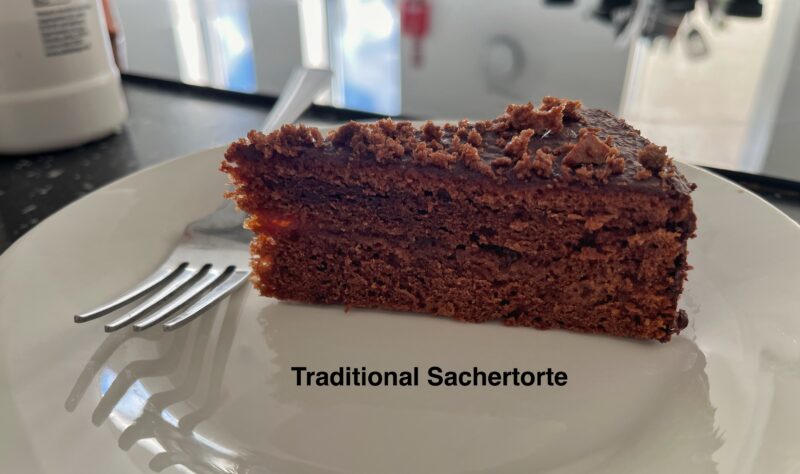
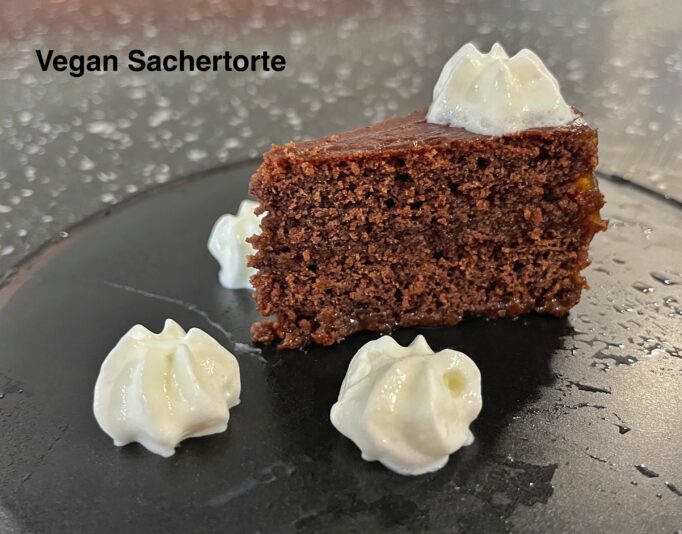
I am currently spending time on researching chickpea flour a little. As a control, I have made a Sachertorte in the traditional way, and I think it is very visible that the crumb looks different (as in more grainy for the looks of it for the chickpea cake). I am having some hypotheses about the reasons for this – but thought I’ll ask if anybody has ideas about why this may be? (I reckon it could be good to ask before I share my own thoughts, as some may have things in mind that I had not thought of! 😊 Also I’d like to add that this question is more out of curiosity, and doesn’t quite affect what I am working on for the challenge, so feel free to share views there! 😃)

 Mercedes Delgado de Miguel, Roxana Forné Gasulla and 4 others4 Comments
-
Did you sift the flour? Is it flour you ground yourself or store-bought? There might still be a lot of particles left, which could make it hard for it to absorb the liquid properly. It becomes somewhat gelatinized, while the fibrous parts don’t. I’d suggest letting it soak a little longer to give all the tiny grains time to absorb the liquid. Does your flour contain any of the chickpea skins? Try toasting the chickpeas a little before making the flour, or lightly toasting the flour before making the cake. That will give it better flavor, though be careful because the starches will need a little more moisture and will behave a little differently. BUT IT’S WORTH IT. It’ll give the chickpeas a nutty flavor. Now tell me what you thought—let’s see if we’re “on the same page,” haha.
¿Tamizaste la harina? ¿Es harina molida por ti o comprada? Puede que muchas partículas queden y cueste que se hidrate correctamente. Queda medio gelatinizado mientras la parte más fibrosa no. Yo diría que, al hidratarlo, lo dejes un ratito más, para darle tiempo a todos los granulitos a que se hidraten. ¿Tu harina tiene parte de la cascara o piel de los garbanzos? Probá tostando los garbanzos un poquito antes de hacer la harina, o de tostar apenas la harina antes de hacer la torta. Eso le dará mejor sabor, aunque ojo porque los almidones necesitarán un poquito más de humedad y los almidones se comportarán un poquito diferente. PERO VALE LA PENA. Le dará un nutty flavor a los garbanzos. Ahora contame lo que pensaste vos a ver si estamos “flotando en la misma sintonía ” jaja.
2 weeks agoTranslated from Spanish
-
Level:
 Scoolinary Team
What an interesting experiment, Réka! I love that you prepared both versions to compare the results. In the photos, you can really see that difference in the crumb you mentioned. Laura has raised some very interesting points about particle size and hydration. I’d add that the absence of gluten and the different composition of proteins and starches in chickpeas can also influence the structure. It would be interesting to try a longer hydration time while keeping the other variables constant.
And now I’m curious to hear your hypotheses. Do they align with what we’ve discussed, or did you observe something different during the baking process? 😊Level:
Scoolinary Team
¡Qué interesante este experimento, Réka! Me encanta que hayas preparado ambas versiones para comparar resultados. En las fotos se aprecia esa diferencia en la miga que comentas. Laura ha planteado puntos muy interesantes sobre la granulometría y la hidratación. Yo añadiría que la ausencia de gluten y la diferente composición de proteínas y almidones del garbanzo también pueden influir en la estructura. Sería interesante probar una hidratación más prolongada manteniendo las demás variables constantes.
Y ahora tengo curiosidad por conocer tus hipótesis. ¿Coinciden con lo que hemos comentado o has observado algo diferente durante la elaboración? 😊
12 weeks agoTranslated from Spanish
-
Hi Laura and Sol! @laupet2000gmail-com @soldamiani
Yes, my thoughts are also pointing in the same direction as yours. I have sifted, the flour is store-bought, and doesn’t appear to contain any particles from skins, etc, and even is sold as super-fine and it does appear superfine, like it were normal flour. In the process, I haven’t seen at least any visible traces of the flour not getting well-hydrated and added gradually all the flour, so I added a small portion and mixed until no lumps, and then continued until all flour was in (I may have as well been overly careful there because the liquid part of the recipe was visually unexpectedly large as this flour apparently takes a lot more water than normal flour). Not sure this was 100% successful but I suppose I at least tried not to end up with a bad hydration as the flour powder appears to be more prone to stick. Also it was sitting after a while before baking for at least 20 mins, but not sure that in itself helps. (If you have any further ideas about what I could have done differently, or if you think any of the precautions sound insufficient, all suggestions are very welcome there!! :)) Sadly, I only found nutritional specifications and that it is minimally modified product in the technical sheets (so probably if I want to know more about the process, etc, I should talk to the manufacturer or something).
My take on this was both related to particle size and starch composition, so basically what I started to look up right away was what the starches are, how big their granules are non-hydrated/hydrated and what structure it builds once it gelatinises in the oven. Sometimes I think even granule sizes (if they are big) can give a grainy structure and mouthfeel, so I sort of started by checking this between the two flours, and then also the hydrated sizes, and mechanism of gelatinisation in the oven.
I could dig out some numbers that say that the granule sizes are larger in general for the starches in the chickpea flour I had. This can definitely be a contributing factor in the different texture. There is also another thing that I find interesting: the chickpea starches have a larger proportion of amylose that get out of the granules partially, forming a gel texture upon heating, but then locally the remaining amylopectin also can contribute to larger particle bits. There are also types of protein in this flour that according to some experiments, don’t incorporate as much to the framework as the egg proteins do when doing an aerated cake, because the egg apparently has more possibilities for disulphide bonds and some other interactions that makes its integration smoother and adds to cohesion. Apparently this is also a big thing in chickpea-based products and they see the grains coming from the protein non-integration and aggregation on an electron microscope. There is also a non-flour factor – the vegan cake contains ‘smooth’ almond butter but even these have full particles of quite large sizes, so these also can influence the end result. I suppose given that I unfortunately don’t have experimental chemistry equipment to do experiments on this level, it is hard to tell entirely, exactly which one is the culprit or what combination of them is. Also sadly some of the data in papers say very different things (and we also know that having a different composition apart from the flour – sugars, etc – will also alter the behaviour of the structural ingredients in baking), so I am just guessing these are possible explanations. This of course also doesn’t rule out that I was not properly hydrating, but there is apparently a study that says that even with hours of hydration and slow heating in certain types of chickpea flour, full hydration can be challenging, so perhaps it can be a component of the problem by virtue of granule structure already.
And as for the chickpea roasting, I have a secret plan there because I wanna go no-waste with my entry, and I am going to use this technique for one of the components (but not the flour to show some variation :)).
Sorry for the long reply, thought there may be interesting information in this – I certainly was quite surprised to find so many scientific papers that are sort of relevant and interesting!
1-
@rekahorvathr-e2c3b8 I LOVED YOU ANSWER 🙂
1
-
-