-


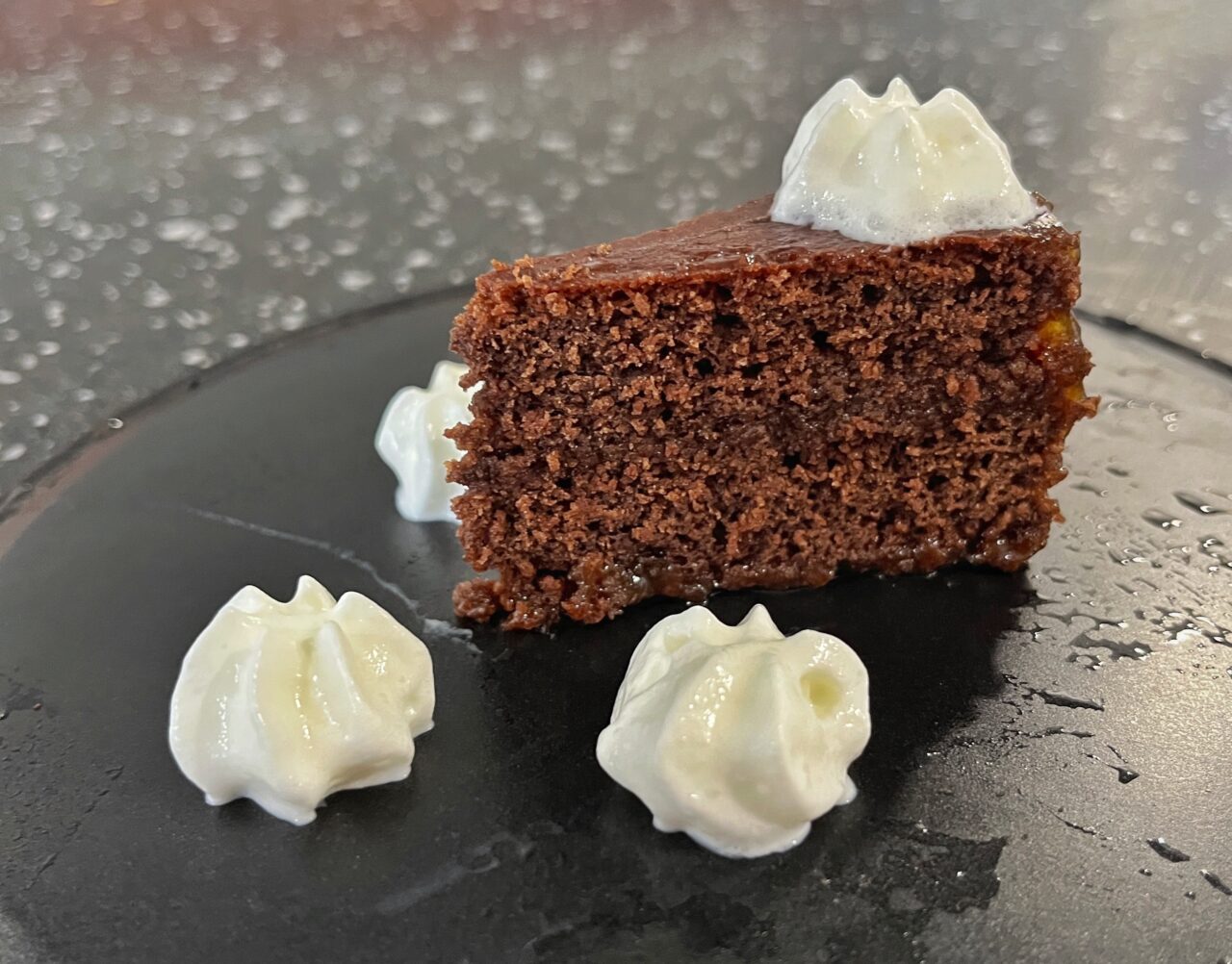
Hi all! I am sure many are excited about the global bean challenge. I am quite a lot, too! I am planning on entering with my own recipe, but to do that, there is a long way to go for someone who usually doesn’t work with legumes as baking ingredients. Therefore, I am studying them first, by looking at compositions and technical sheets, but I suppose it is just as important to gain some experience with them in reality, to see how they behave in processes, next to other ingredients, how they taste like, and so on. So I’ve started with a random recipe from the internet that was intended for vegan chocolate sponge, and turned it into a low-effort Sacher torte (low effort because I left off the chocolate glaze, for example, but from the POV that I was interested in baking this, this wasn’t relevant).
When working on your own entries, what are you excited about the most? 😃
I definitely am the most eager for the part when I am gonna sit down with a calculator in my hand, with everything I got to know while doing my pre-development research, and l can think through what would be best to achieve that my idea comes alive!
What is your process of creating dishes? Where do you get inspiration from, and what helps you most in the creative process? 👀😃

 ivana saiz, Maloles Muñoz and 5 others9 Comments
-
Level:
 Sous Chef
My creative process usually starts with one little idea and ends with 37 open tabs, a notebook full of scribbles, and another sleepless night! 😂
I love finding inspiration in traditional recipes, different cultures, and childhood food memories. For this challenge, I’m experimenting with some unexpected combinations. Can’t wait to see if reality matches my imagination! 🤣❤️
Your cake looks delicious, by the way! 😍
2-
@lanamihajlovic Thanks, and good luck for your experimentation! Anything interesting coming out of it in the past couple of days? 🙂
-
Level:
Sous Chef
I haven’t cooked or published anything yet. But I hope to soon. 😊
1-
@lanamihajlovic Looking forward to that!! 🙂
1
-
-
-
-
I identify my customers’ needs and then try to develop something that will also be useful to others.
Today, my bread for diabetics helps many people, and I started developing it for one of my best customers who suddenly stopped buying from me. When I spoke with her, I found out she had diabetes and really missed my bread terribly. I told her, “Give me two months,” and I sat down to study each ingredient one by one; I even tested the product on several of my diabetic customers. They volunteered to check their blood sugar levels one hour, two hours, and four hours after eating it. It was a success, and then the HbA1c results came back, and that was it 🙂 This Sunday, I’ll get a call from a nutritionist representing a woman who wants to try my bread, but she’s diabetic and has been told to avoid salt and animal proteins. They want to protect her kidneys, so I’ll explain my process and the ingredients—most of which I grind myself. Maybe it would be good to cut the salt in half, or remove it completely, and see what I can use instead to give the bread some flavor—something that won’t affect her, maybe a seasoning that could even be beneficial for her. I don’t know… Since that bread doesn’t rise much, my yeast won’t go crazy, hahaha.
The truth is, the bakery must serve a purpose, and I think I’m slowly getting there.
Your cake looks good enough to take a double bite out of, hahaha
Yo detecto necesidades en mis clientes y luego veo de desarrollar algo que también me servirá para los demás.
Hoy mi pan para diabéticos ayuda a varias personas y comencé desarrollándole el pan a una de mis mejores clientas que de repente dejó de comprarme. Cuando le hablé, me enteré que estaba con diabetes y que realmente extrañaba horrores mis panes. Le dije: deme dos meses y me senté a estudiar componente por componente, hasta probé el producto en varios de mis clientes diabéticos. Ellos se ofrecieron a tomarse el nivel de glucosa a la hora, dos horas y 4 horas. fue un éxito y luego llegó el resultado de la glicosilada y ya 🙂 Este domingo me llamará la nutricionista de una señora que quiere probar mi pan, pero es diabetica y le prohibieron la sal y proteínas animales, Quieren cuidar su riñón, así que le explicaré mi proceso y las materias primas, que además muelo yo misma en su mayoría. Tal vez sea bueno bajarle a la mitad la sal, o quitarla por completo y ver por qué puedo cambiarla para darle algo de sabor al pan. Algo que no le afecte a la señora, algún condimento que hasta le resulte beneficioso, no sé.. Como ese pan no crece mucho, no se me van a enloquecer mis levaduras jajaja.
La verdad que la panadería debe tener su propósito y creo que con poco lo voy logrando.
Tu pastel está para darle un bocado doble jajaja
13 weeks agoTranslated from Spanish
-
@laupet2000gmail-com Thank you – both for the compliment and for the informative answer!! I actually quite love the idea that you are making the bread in a “grain-to-final product” manner, and I have seen one of your posts about cocoa grinding and usage in bread before, and it was incredibly interesting (just didn’t get to ask more about it at the time… 🙈). How is that project going? Does the bread made out of it taste anything like cocoa?
As for the things now going on, I think it is so cool that it seems to motivate you best to help out people who simply can’t eat the bread they’d like – and you are doing it so successfully!! And admittedly your chemistry background probably proves useful in the context – I am at least quite happy to realise that sometimes (despite me currently being a quantum theorist rather than an “actual” chemist), my whole journey becomes useful in a rather unexpected manner now that I can make good pastries that make others happy! 🙂 (Not sure how you are with this, but it gives good vibes to me to do this! 🙏😊)
1-
Me too—I love it. I feel useful. The project to make bread with flour from cocoa pod shells is on hold. The flour had turned rock-hard; it’s very hygroscopic. The thing is, the flour smelled a little off, and it tasted somewhat sour. I wrote to the doctor to have it tested for aflatoxins—especially types B and G—but they told me they didn’t have the reagent and that since they’d put the flour in the autoclave, it was already safe. And I didn’t want to pursue it further—Aspergillus dies, but aflatoxins don’t… I’m not going to contaminate my equipment and work environment. I just asked for a test. Well, if they pay for the test, I’ll make the bread for them. I usually give away my ingredients for free, but I’m not going to pay for the tests 🙁
A mí también, lo amo. Me siento útil. El proyecto del pan con harina de la cascara de la vaina de cacao está en stand by. La harina estaba hecha una piedra, es muy higroscópica. El tema es que oli un poco la harina y la noté algo ácida. Le escribi a la Dra.para que me hagan un análisis de aflatoxinas , sobre todo B y G, pero me dijeron que no tienen el reactivo y que como pusieron en el autoclave la harina, ya estaba segura. Y no quise seguir, el aspergillus se muere, pero las aflatoxinas no…No voy a contaminar mis equipos y ambiente de trabajo. Sólo pedí un test. Bueno, si pagan el test, les hago el pan. Realmente yo regalo mis ingredientes, pero ya pagar los tests no 🙁
3 weeks agoTranslated from Spanish
-
-
-
It’s delicious, Reká 😘
Se ve delicioso Reká 😘
13 weeks agoTranslated from CS
-
@roxanaforne Thank you so much! 🙂
-
-