-


Laura Peters de Velásquez posted an update in the club
5 weeks ago Pastry & Bakery
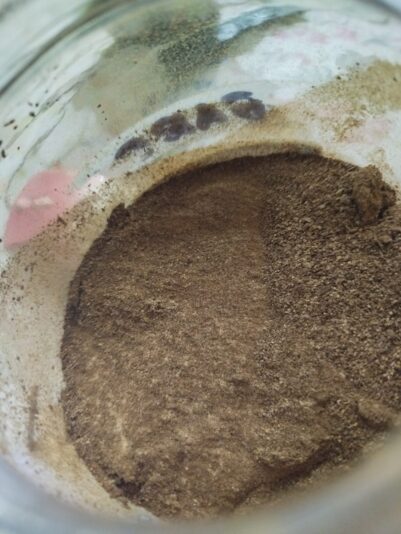
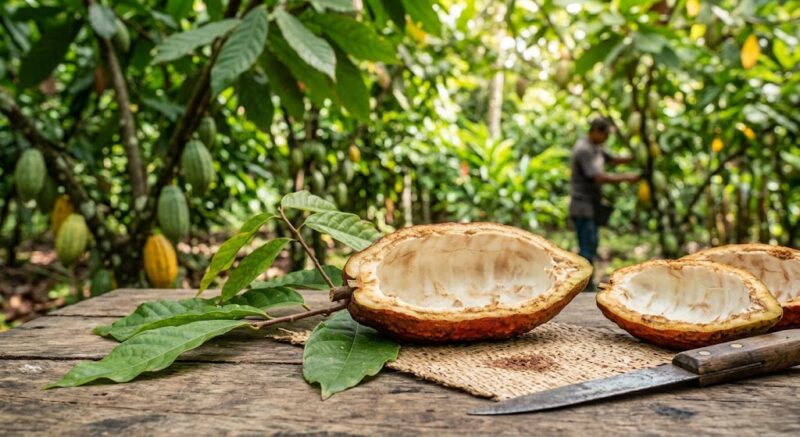
Today I received some flour made from the cocoa pod (outer husk) to see if I can use it to make bread. This will be a new experiment for me, and it’s also a chance to see if this product could be used in baking instead of being discarded as waste, thereby creating another source of income for cocoa producers. First, I need to study the product, its characteristics, and its benefits, and then figure out how to prepare it. 🙂
Hoy me han entregado una harina hecha de la mazorca (Vaina exterior) de cacao, para ver si puedo hacer algún pan. Será un ensayo nuevo para mí y es también ver si ese producto pudiera utilizarse en panadería en vez de descartarse como desecho y generar otra entrada para los productores de cacao. Primero debo estudiar el producto y sus características y beneficios y luego, a ver cómo lo preparo. 🙂
 Translated from Spanish
 Mercedes Delgado de Miguel, Roxana Forné Gasulla and Mercedes Minaya Palacios7 Comments
-
Level:
 Sous Chef
That’s interesting—let us know what you find out. I’m curious to see what you do with it.
Level:
Sous Chef
Qué interesante, ya nos contarás lo que descubres. Tengo curiosidad por ver qué haces con ella
15 weeks agoTranslated from Spanish
-
Level:
Scoolinary Team
What an interesting experiment, Lau! 😊 I love the idea of making use of a product that’s normally discarded—and that could also create new opportunities for cocoa farmers. Once you’ve confirmed that it’s safe for consumption, you could start by substituting a small percentage of wheat flour and see how it affects hydration, fermentation, and the crumb texture. Are you planning to do your first tests with sourdough or yeast? Be sure to let us know how it goes—I’m really looking forward to seeing the results! 🍞
Level:
Scoolinary Team
¡Qué interesante este experimento, Lau! 😊 Me encanta la idea de aprovechar un producto que normalmente se descarta y que además podría generar nuevas oportunidades para los productores de cacao. Una vez comprobada su aptitud alimentaria, podrías empezar sustituyendo un pequeño porcentaje de harina de trigo y observar cómo influye en la hidratación, la fermentación y la textura de la miga. ¿Tienes pensado hacer las primeras pruebas con masa madre o con levadura? ¡Ya nos contarás cómo evoluciona, que tengo muchas ganas de conocer los resultados! 🍞
15 weeks agoTranslated from Spanish
-
@soldamiani I’m more of a sourdough fan than a yeast fan, so that’s what I’ll use. I’VE ALREADY spoken with the university that sent me the sample. They’VE ALREADY confirmed that it comes from organic farming, so I’m not worried about organophosphates or pyrethroids, etc., etc.,
On the other hand, they’ve already confirmed that the sample was ground very recently—they even autoclaved it. Well, given that short production period, I’m confident it’ll be free of aflatoxins, which was my biggest concern; Aspergillus isn’t visible to the naked eye, and mycotoxins even less so. Well, I’ve already found out that it has a high pectin content,
It contains flavonoids (flavan-3-ols). These are the most abundant group of antioxidants in the cocoa pericarp and seeds: Catechin and epicatechin: Flavonoid monomers with a very high capacity to neutralize free radicals and protect against oxidative stress. It also contains procyanidins (oligomers B1, B2, and C1): chains formed by the linking of several catechin and epicatechin units. They play a key role in cardiovascular protection and anti-inflammatory effects.
It contains gallic acid and protocatechuic acid: powerful phenolic antioxidants that serve as precursors to other flavonoids.Chlorogenic acid: known for regulating glucose metabolism and combating cellular damage. Caffeic acid and ferulic acid: Present in small amounts, they help protect plant tissue from UV radiation and microorganisms.
It contains proanthocyanidins: These are complex flavonoid polymers responsible for the natural astringency and bitterness of the peel. They act as potent free-radical scavengers and provide antibacterial properties.
It contains coumarins (e.g., 7-hydroxycoumarin): Phenolic compounds with antioxidant, anticoagulant, and antimicrobial properties.
andanthocyanins: Pigments
I also found a lot more information from Peru, and apparently no more than 5% is used due to its characteristics. Today they sent me more technical information to read and research. But I’m already starting to think this could be something really great to experiment with in my nano kitchen. 🙂 NANO, but never boring, hahaha@soldamiani Yo soy más fan de la masa madre que de la levadura, asi que eso utilizaré. YA hablé con la Universidad que me hizo llegar la muestra. YA me confirmaron que proviene de cultivo orgánico, por lo que no me preocupo por organofosforados o piretroides, etc, etc,
Por otra parte, me confirmaron ya que la muestra tiene muy poco tiempo de haber sido molida, hasta la autoclavaron. Bueno con ese corto período de producción estoy tranquila que estará libre de aflatoxinas que era lo que más me preocupaba, el aspergillus no se ve así nomás y menos las micotoxinas. Bueno, ya averigüé que tiene un alto contenido de pectina,
Contiene Flavonoides (Flavan-3-oles) Son el grupo de antioxidantes más abundante en el pericarpio y las semillas de cacao: Catequina y Epicatequina: Monómeros flavonoides con altísima capacidad para neutralizar radicales libres y proteger contra el estrés oxidativo. Tiene además procianidinas (Oligómeros B1, B2 y C1): Cadenas formadas por la unión de varias unidades de catequina y epicatequina. Tienen un papel destacado en la protección cardiovascular y antiinflamatoria.
Contiene ácido gálico, ácido protocatéquico: Un potente antioxidante fenólico precursor de otros flavonoides. Acido clorogénico: Conocido por regular el metabolismo de la glucosa y combatir el daño celular.
Ácido cafeico y ácido ferúlico: Presentes en pequeñas cantidades, contribuyen a la protección del tejido vegetal frente a la radiación UV y microorganismos.
Posee proantocianidinas: Son polímeros complejos de flavonoides responsables de la astringencia y amargor natural de la cáscara. Funcionan como potentes atrapadores de radicales libres y brindan propiedades antibacterianas.
Contiene cumarinas (p. ej., 7-hidroxicumarina): Compuestos fenólicos con propiedades antioxidantes, anticoagulantes y antimicrobianas.
y antocianinas: Pigmentos
También encontré mucha más información de Perú, y que no se utiliza más de un 5% por su característica.
Hoy ya me enviaron más info técnica para leer e investigar. Pero ya comienzo a creer que esto puede ser algo muy bueno por el cual experimentar en mi nano cocina. 🙂 NANO, pero nunca aburrida jajaja5 weeks agoTranslated from Spanish
-
Level:
Scoolinary Team
@laupet2000gmail-com Lau, your tiny kitchen has more research activity than many labs! 😂 I love that you went straight to the university to find out the origin and characteristics of the sample. This is already a full-fledged culinary R&D project!
I find the pectin aspect particularly interesting, because it could affect water absorption and the crumb texture. And with sourdough, there are even more variables to explore! That 5% you found could be a good starting point, as long as its food safety is validated, since organic origin and autoclaving alone don’t guarantee the absence of mycotoxins.
Have you considered making a control dough without cocoa powder and another with 5% to compare hydration, fermentation, and flavor? It would also be great to know whether it adds cocoa notes or rather bitterness and astringency.
I can’t wait to follow this experiment with you! 😊Level:
Scoolinary Team
@laupet2000gmail-com ¡Lau, tu nano cocina tiene más actividad de investigación que muchos laboratorios! 😂 Me encanta que hayas ido directamente a la Universidad para conocer el origen y las características de la muestra. ¡Esto ya es todo un proyecto de I+D gastronómico!
Lo de la pectina me parece especialmente interesante, porque podría influir en la absorción de agua y la textura de la miga. Y con masa madre, ¡más variables por explorar! Ese 5 % que encontraste puede ser un buen punto de partida, siempre que esté validada su aptitud alimentaria, ya que el origen orgánico y el autoclavado por sí solos no garantizan la ausencia de micotoxinas.
¿Te has planteado preparar una masa de control sin harina de cacao y otra con un 5 % para comparar hidratación, fermentación y sabor? Sería fantástico conocer también si aporta notas de cacao o más bien amargor y astringencia.
¡Qué ganas de seguir este experimento contigo! 😊5 weeks agoTranslated from Spanish
-
I’ve already requested a test 😁 to see if it’s possible. Otherwise, I won’t take a bite, hahaha. Yeah, I know that mycotoxins don’t disappear with heat or anything like that. 😢 Keep in mind, I’m just trying to see if I can come up with a bread recipe—that’s all—but I like to think ahead and, of course, make sure whoever tries it stays safe. ☺️
Ya solicité un análisis 😁 a ver si se puede. Sino no le clavo un diente jajaja Si, si las micotoxinas no desaparecen con calor, ni nada, yo lo sé. 😢 Fíjate que es sólo ver si puedo formular un pan, nada más, pero a mí me gusta ver más allá y obviamente cuidar la integridad física de quien lo pruebe.☺️
5 weeks agoTranslated from Spanish
-
Level:
Scoolinary Team
We look forward to hearing about your discoveries, Lau
Level:
Scoolinary Team
Quedamos atentos a tus descubrimientos, Lau
15 weeks agoTranslated from Spanish
-
@soldamiani I still needed to reply to you, and I’m sorry it took me so long—I’ve been swamped with a million things.
I’m going to make the 5% bread and a 10% one. The white bread is really my go-to recipe—I know it like the back of my hand, haha. I also want to try a 5% version in a gluten-free rice bread—let’s see how that turns out. Well, those are the plans—we’ll see how it goes. And next week I’ll post another experiment; it’s about cutting costs without sacrificing quality. Well, here’s a sneak peek at my crazy idea. It turns out that importing 4 pounds or 25 pounds of barley is very expensive for me, just like importing rye and EVERYTHING else I use to make my breads—besides wheat flour, whether soft, strong, or whole wheat. But barley is the most expensive—horribly expensive. And while watching videos of a brewery… bam!!! A lightbulb went off in my head. What if I use the malted barley that the brewery uses and try to see if I can make bread with it? I called the brewery and the supplier that provides all their malted barley and asked if they’d sell some to me. To make a long story short, this Thursday I’ll buy 5 pounds to test it out. I’ll grind it and see what comes of this crazy idea of mine. Those 5 pounds would cost me almost 7 times less than the 4 pounds I usually buy elsewhere… Can you believe it? I mean, I could sell my barley bread at a more affordable price for people who can’t afford it right now. Well, it’s working out perfectly because I just bought my own flour mill, so I’m really excited and can’t wait to try it out. At first I wondered which one to use, but I’ll try the most common varieties that work really well in beer: Pilsner and Vienna. The master brewer recommended Vienna malt, so I’ll start with that. There are also some roasted barleys that give beer a chocolatey note—I even thought about adding a tiny amount of that to a new loaf to give it that hint of aroma…And, since I’m the great-granddaughter of brewers (they worked in the early days of the Quilmes Brewery—my great-grandfather at the factory and my great-grandmother was the cook for all the master brewers who came from Germany, and she also cooked for Don Otto) hahaha, I’m going to sign up for a beginner’s brewing course right away because I’m passionate about beer and I want to expand my knowledge and be happy. Phew, I think I’ve already bored you with all these ideas in my head, hahaha. I’M OVERJOYED—I love this, and it really saddens me that I don’t have the money I need for my bigger bakery, but oh well: THIS IS HOW GOD LEADS ME, SHORT AND SWEET!!!! Otherwise, I don’t know how many more crazy things I’d do. Hahaha
@soldamiani Me quedó algo pendiente de responder y perdón que me tardo, pero ando en mil cosas.
voy a hacer el pan de 5% y uno de 10%. El blanco, realmente es mi pan base, que ya lo conozco como a mis hijos jajaja. También lo quiero probar con un 5% en un pan de arroz sin gluten, a ver qué tal. Bueno, esos son los planes, a ver qué tal. Y esta semana próxima postearé otro ensayo, lo tengo para el tema de abaratar costos y no bajando calidad. Bueno, te adelanto mi locura. Resulta que trae 4 libras o 25 libras de cebada me sale muy caro, igual que traer centeno y TODO lo que traigo para hacer mis panes fuera de lo que es harina de trigo, suave, fuerte o integral. Pero la cebada es lo más caro, horriblemente caro. Y viendo videos de una cervecería….plín!!! Se me prendió la lamparita. Y si uso cebada malteada que utiliza la cervecería y pruebo con ella si puedo hacer pan? Hablé a la cervecería y compañía que trae todas las cebadas malteadas y les pregunté si me podían vender a mi. Te lo hago corto, este jueves compraré 5 libras para probarla. La moleré y veré qué sale de esta, mi locura. Esas 5 libras me saldrían casi 7 veces menos que las 4 libras que yo compro afuera… ¿Te imaginas? O sea, podría poner mis panes de cebada a un precio más accesible para las personas que no pueden permitírselo en este momento. Bueno, va justo porque me compré mi molino de harina, así que estoy muy emocionada y ya quiero probarlo. En un primer momento pensé cuál de todas usaré y bueno, probaré las más comunes y que resultan muy bien en la cerveza: la pilsen y la Vienna. El maestro cervecero me recomendó la Viena, así que con esa voy primero. También hay unas cebadas tostadas que a la cerveza le dan una nota a chocolate, pense hasta agregarle una mínima cantidad de esa a un pan nuevo, para darle ese toque de aroma…Y, como soy bisnieta de cerveceros (trabajaron en los inicios de la Cervecería Quilmes, mi bisabuelo en la fábrica y mi bisabuela era la cocinera de todos los maestros cerveceros que venían de Alemania y también le cocinaba a Don Otto) jajaja ya me voy a enganchar en un curso de inicio a la cervecería ahí mismo porque me apasiona la birra y quiero expandir mis conocimientos y ser feliz. UFFF, creo que ya te aburrí con tanta idea en mi cabeza, jajaja ESTOY LOCA DE FELICIDAD, amo ésto y me da mucha pena no tener el dinero necesario para mi panadería más grande, pero bueno: DIOS ASI ME LLEVA, CORTITA!!!! sino, no sé cuantas locuras más haría.jajajaj
4 weeks agoTranslated from Spanish
-
-
-
-