-

Adriana Arcila Castillo posted an update
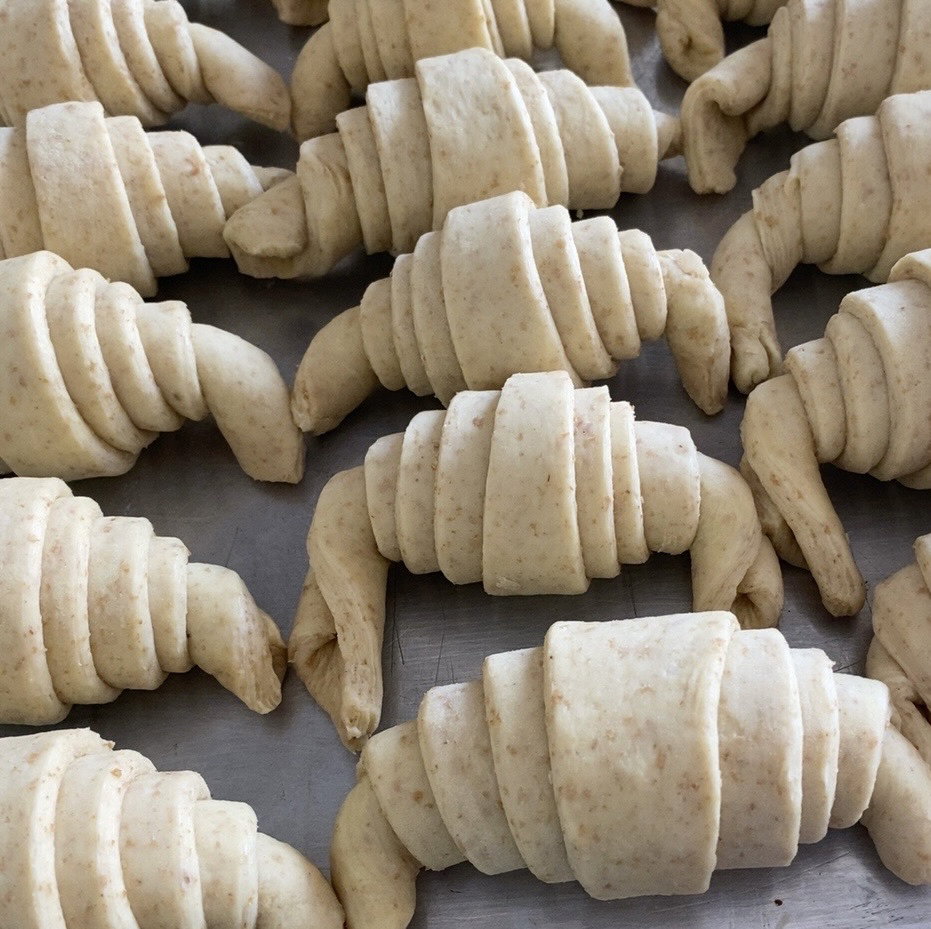
Understanding the #Bachour Croissant
Entendiendo el croissant #Bachour
 Translated from Spanish
 Maloles Muñoz, Marianela Solis and Mercedes Minaya Palacios3 Comments
-

They look so good on you. What kind of flour did you use to make the croissants? That would really help me—I’m in the middle of making them, but I still can’t get the gluten to develop. I’m not sure if it’s my flour. I used King Arthur brand, 12.7%. Thanks in advance.
Que lindo le están queda do. Que harina Ud uso para hacer los croissants eso me ayudaría estoy en el process pero aun no logro desarrollar el gluten no se si sera mi harinas. Yo use marca King Arthur de 12.7%. Gracias de antemano
5 weeks agoTranslated from Spanish
-
Level:
 Scoolinary Team
@jennyospina Hi, Jenny
Welcome!
King Arthur flour with 12.7% protein is within the appropriate range for croissants, since the recommended protein content for croissants and brioches is approximately 12–13%. So the problem is probably not just the flour; you should also make sure the dough doesn’t exceed 24–25 °C during kneading, add the liquid gradually, incorporate the butter once the dough has begun to develop gluten, knead until you can stretch it into a thin, elastic membrane, and follow the cold resting times—because if the dough shrinks or tears, it may need more resting time before continuing.
As a reference, in classic croissants, a high-gluten flour with approximately 12.5–13% gluten content is used, and the gluten network is checked before laminating; your flour should work well, but I’d pay special attention to the temperature, hydration, kneading, and resting times.
Tell us a little more about your culinary journey so we can get to know you.
HugsLevel:
Scoolinary Team
@jennyospina Hola Jenny
¡Bienvenida!
Una harina King Arthur con 12,7 % de proteína está dentro del rango adecuado para croissants, ya que en Croissants y Brioches se recomienda aproximadamente un 12–13 %, así que probablemente el problema no sea solo la harina; también conviene controlar que la masa no supere los 24–25 °C durante el amasado, añadir el líquido poco a poco, incorporar la mantequilla cuando la masa ya haya comenzado a desarrollar gluten, amasar hasta obtener una película fina y elástica al estirarla y respetar los reposos en frío, porque si la masa se encoge o se rompe puede necesitar más reposo antes de continuar.
Como referencia, en Croissant clásico se trabaja una harina de fuerza de aproximadamente 12,5–13 % y se comprueba la red glutinosa antes de laminar; tu harina debería funcionar bien, pero revisaría especialmente la temperatura, la hidratación, el amasado y los reposos.
Cuéntanos un poco más de tu recorrido gastronómico así te conocemos.
Abrazo5 weeks agoTranslated from Spanish
-
-
Level:
Scoolinary Team
It’s great to see you making croissants, Adriana! 🥐 The shaping looks pretty uniform, and the layers of dough are well defined. Now comes one of the most interesting parts: seeing how the layers hold up during proofing and baking. How did they turn out in the end? Did you get that airy interior and a crispy crust? We’d love to see a photo of the results and hear what you learned most from the course!
Level:
Scoolinary Team
¡Qué bueno verte practicando los croissants, Adriana! 🥐 El formado se ve bastante uniforme y las vueltas de masa están bien marcadas. Ahora viene una de las partes más interesantes: comprobar cómo responden las capas durante la fermentación y el horneado. ¿Cómo te quedaron finalmente? ¿Conseguiste ese interior alveolado y una corteza crujiente? ¡Nos encantaría ver una foto del resultado y saber qué fue lo que más aprendiste del curso!
5 weeks agoTranslated from Spanish
-