-

Lazara Tresol Casanova posted an update
Thank you so much for your comment and for taking the time to observe and analyze the preparation in such detail. ❤️
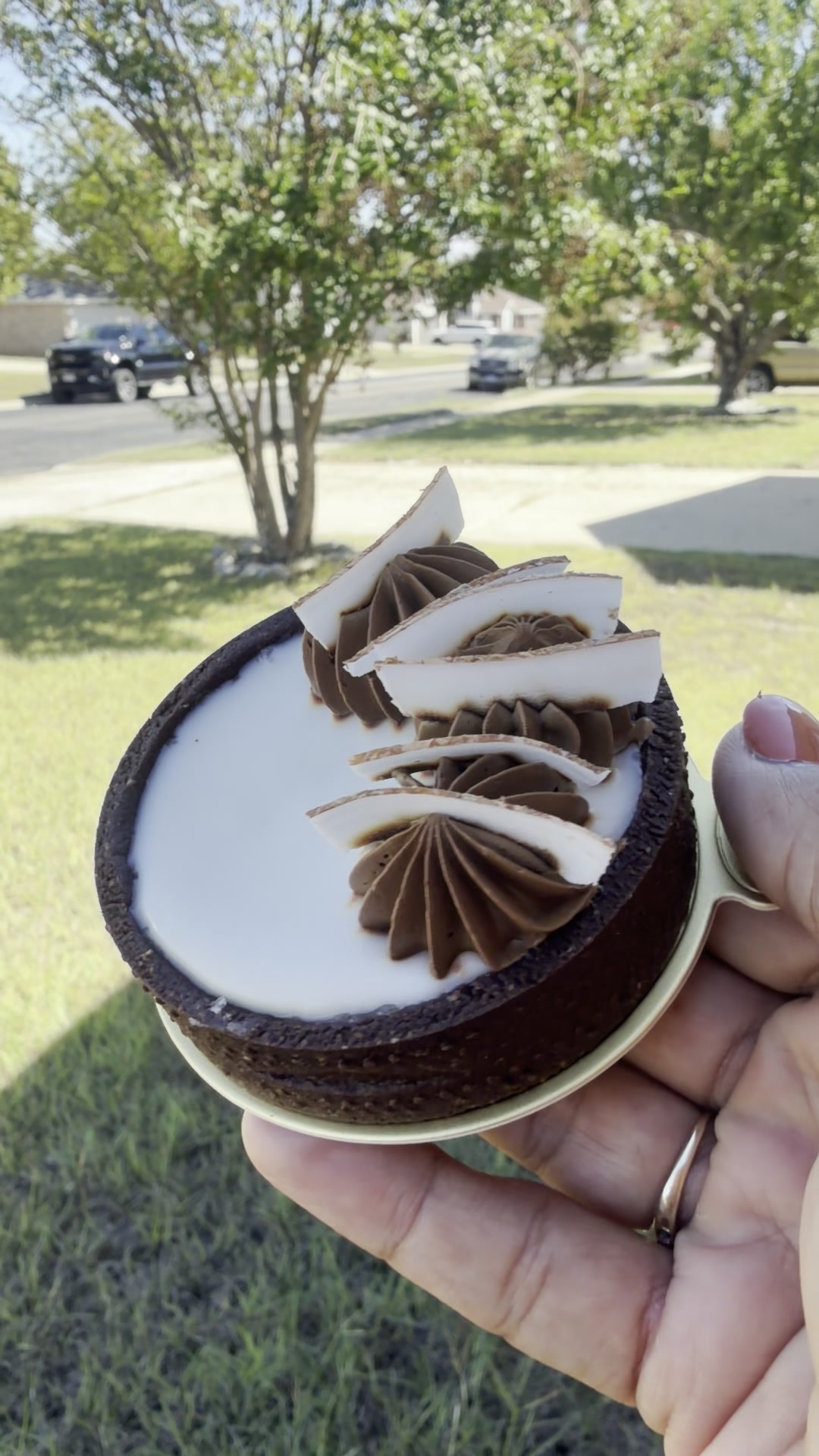
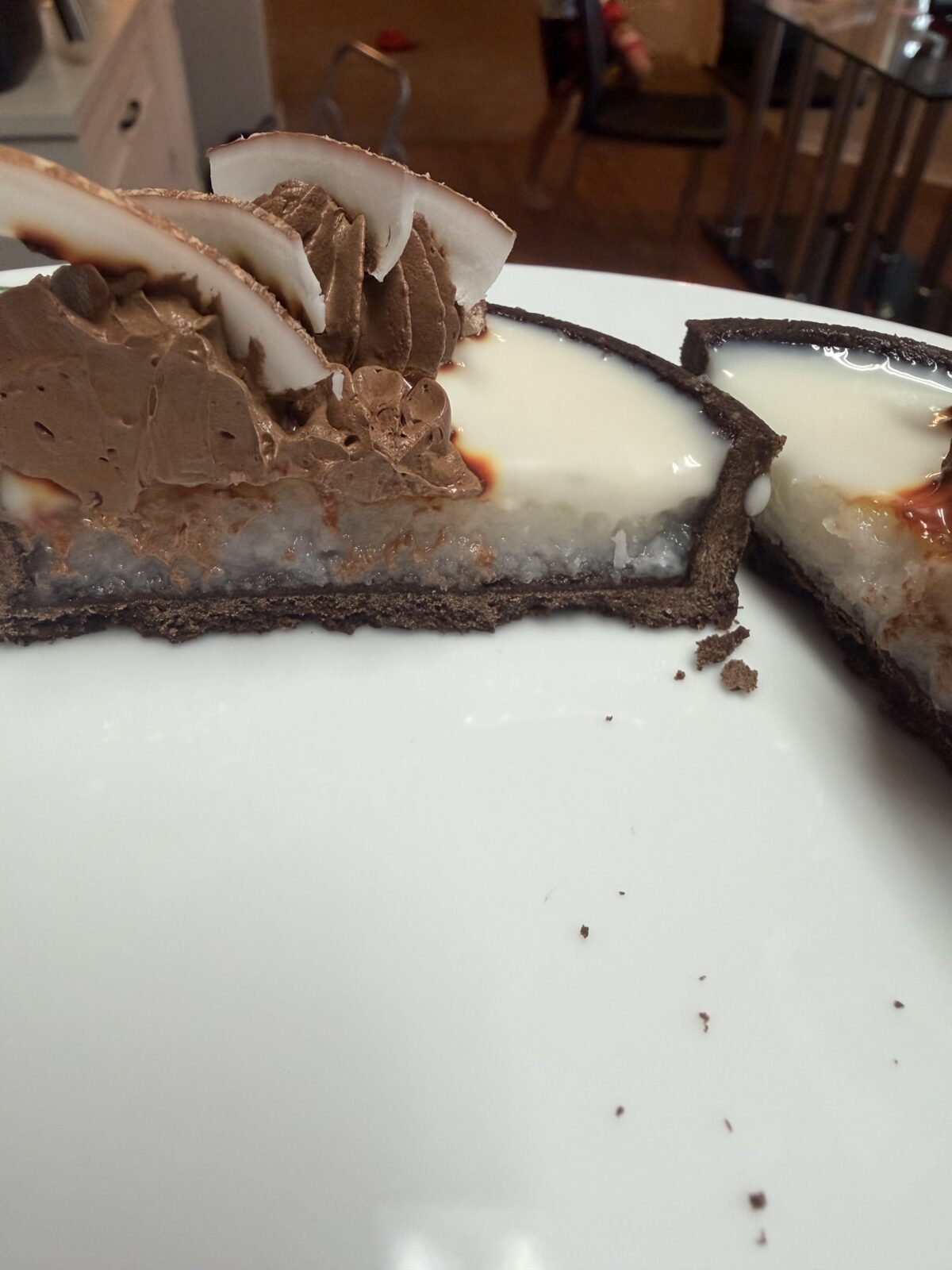
Let me tell you a little about it: it’s a cocoa sablée tartlet filled with coconut dulce de leche. On top of the filling is a thin layer of coconut ganache, made with two parts coconut milk and one part white chocolate. My goal was to keep it as light as possible so that the coconut would remain the star of the show, while also achieving a smoother finish that wouldn’t harden too much after chilling.
It’s topped with chocolate whipped cream. I chose to use a lighter cream instead of a ganache because I didn’t want to add too much chocolate and end up overpowering the coconut flavor, which I consider quite delicate and can easily get lost when paired with more intense flavors.
To finish it off, I used thin slices of fresh coconut, aiming to maintain that sense of freshness and visually highlight the main ingredient.
As for what I found most challenging, it was actually getting a handle on this cocoa dough. I’d worked with it before, but through practice I’ve discovered some nuances that, at least in my experience, make a significant difference. For example, I’ve noticed that I prefer to work with it on the same day. When I freeze it, thaw it, and then try to roll it out and work with it, I find that it becomes much tougher and I don’t get quite the same finish.
I’m not sure if this is due to the recipe, the resting time, or the way I’m working with it, so I’m still experimenting and learning as I go.
If I were to make this tartlet again, I’d mainly change the thickness of the dough. I’d make the edges a little thinner. However, as for the final result, I thought the balance was excellent: you can taste both the coconut and the chocolate without one overpowering the other, and that was exactly what I was aiming for. ❤️
Ultimately, I think that’s what I’m looking for most at this stage: to better understand techniques through practice, to find a balance between flavors and textures, and, above all, to keep learning from every creation.Muchísimas gracias por tu comentario y por tomarte el tiempo de observar y analizar la elaboración con tanto detalle. ❤️
Te cuento un poco sobre ella: es una tartaleta de masa sablée de cacao, rellena con un dulce de coco. Sobre el relleno lleva una pequeña capa de ganache de coco, elaborada con dos partes de leche de coco y una parte de chocolate blanco. Mi intención era mantenerla lo más ligera posible, para que el coco siguiera siendo el protagonista y, al mismo tiempo, conseguir un acabado más suave que no se endureciera demasiado después del reposo en frío.
En la parte superior lleva una chantilly de chocolate. Preferí utilizar una crema más ligera en lugar de una ganache, porque no quería añadir demasiado chocolate y terminar opacando el sabor del coco, que considero bastante delicado y que puede perderse fácilmente cuando se combina con sabores más intensos.
Para terminarla utilicé lascas de coco fresco fileteado, buscando mantener también esa sensación de frescura y reforzar visualmente el ingrediente principal.
En cuanto a lo que más me ha costado, precisamente ha sido entender esta masa de cacao. Ya la había trabajado anteriormente, pero a través de la práctica he ido descubriendo algunas particularidades que, al menos en mi experiencia, hacen una diferencia importante. Por ejemplo, he notado que prefiero trabajarla el mismo día. Cuando la congelo, la descongelo y posteriormente intento estirarla y trabajarla, siento que se vuelve mucho más resistente y que no consigo exactamente el mismo acabado.
No sé si esto se deba a la fórmula, al reposo o a la manera en que la estoy trabajando, así que todavía estoy experimentando y aprendiendo con ella.
Si repitiera esta tartaleta, cambiaría principalmente el grosor de la masa. Haría los bordes un poco más finos. Sin embargo, en cuanto al resultado final, para mí el equilibrio fue muy bueno: se perciben tanto el coco como el chocolate sin que uno termine anulando al otro, y eso era precisamente lo que buscaba. ❤️
Al final, creo que eso es lo que más estoy buscando en esta etapa: entender mejor las técnicas a través de la práctica, encontrar equilibrio entre sabores y texturas y, sobre todo, seguir aprendiendo de cada elaboración.0:06
 Translated from Spanish
 Roxana Forné Gasulla, Réka Horváth and 2 others2 Comments
-

I think this looks superb, and in my opinion the shell also doesn’t seem disproportionally thick. (You probably can go a tad narrower, especially if it is a hard cut, but I think there may be a risk of it becoming brittle depending on the dough, and also it may get soggy very fast – unless, of course, you use a cocoa butter layer or other trick before filling to prevent that from happening. But this is to say that if this were mine, I’d be quite happy with the outlook itself already, so keep going! 🙂 )
To be fair I don’t like coconut, but I’d be happy to have a bite of this one and see how it is for taste. Looks like genuinely nice work! 😀
-
Thank you very much for your comment and advice. To be honest, I hadn’t considered that making the dough thinner could lead to what you mentioned. When I tasted it, it didn’t seem heavy or too hard at all; I think, in fact, the thickness was more noticeable visually (to me) than in the texture when I tasted it. On the palate, it struck me as a fairly well-balanced product, both in terms of its crunch and its flavors.
I also hadn’t considered the possibility of brushing the dough with a thin layer of butter to create a barrier that helps protect it from moisture and extend its shelf life in the refrigerator. I’ll definitely put your advice into practice. Thank you so much for sharing your knowledge and helping me continue to learn and refine my technique!Muchas gracias por su comentario y por sus consejos. La verdad es que no había pensado que, al hacer la masa más fina, podía ocurrir lo que me comenta. Cuando la probé, no la sentí para nada pesada ni demasiado dura; creo que, en realidad, el grosor se apreciaba más visualmente (para mi) que en la textura al degustarla. En boca me pareció un producto bastante equilibrado, tanto en su crocancia como en sus sabores.
Tampoco había tenido en cuenta la posibilidad de pincelar la masa con una fina capa de manteca para crear una barrera que ayude a protegerla de la humedad y prolongar su conservación en el refrigerador. Sin duda, pondré en práctica sus consejos. ¡Muchas gracias por compartir sus conocimientos y ayudarme a seguir aprendiendo y perfeccionando mi técnica!6 weeks agoTranslated from Spanish
-
-