-

Antonio Salvador Moreno Carretero posted an update
Level: Executive Chef
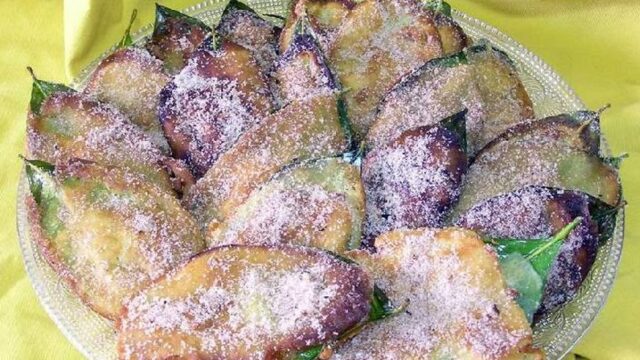
Paparajotes, typical dessert from Murcia.
Since spring is near, I bring you a typical dessert of the Murcian orchard. The paparajote, as I said, is a traditional dessert of the Murcian orchard of Andalusian origin (VIII-XV centuries), introduced by the Arabs, consisting of a lemon leaf coated in fried dough, sugar and cinnamon. It is mainly consumed during Easter and Spring Festivals, being a cultural symbol and a gastronomic joke where the leaf is not chewed.
Arab origin: Its creation is attributed to the Arabs who inhabited the region, experts in pan pastries. They took advantage of the lemon, an abundant fruit in the area, and its leaves to flavor the dough.
Influence sephardic The Jews of Arab origin (Sephardic) who lived in the peninsula also promoted this type of elaborations.
The tradition of the leaf: It is a typical dessert for joking with outsiders. The lemon tree leaf is used to give flavor and structure, but it is not eaten; you should suck the sweet dough and remove the leaf when eating.
Simple ingredients The rustic recipe takes basic ingredients from the garden: egg, milk, flour, sugar, cinnamon, and a lemon tree leaf, preferably Murcian, battered and fried in olive oil.
Recognition: They became popular in the 19th century, appearing in Murcian chronicles of 1896-1897. In 2016, the word was included in the RAE dictionary.
Level:
Executive Chef
Paparajotes, postre típico de Murcia.
Ya que está cerca la primavera, os traigo un postre típico de la huerta murciana. El paparajote, como ya he dicho, es un postre tradicional de la huerta murciana de origen andalusí (siglos VIII-XV), introducido por los árabes, que consiste en una hoja de limonero rebozada en masa frita, azúcar y canela. Se consume principalmente en Semana Santa y Fiestas de Primavera, siendo un símbolo cultural y una broma gastronómica donde no se mastica la hoja.
Origen árabe: Su creación se atribuye a los árabes que habitaron la región, expertos en repostería de sartén. Aprovechaban el limón, fruto abundante en la zona, y sus hojas para aromatizar la masa.
Influencia sefardí Los judíos de origen árabe (sefardíes) que vivían en la península también impulsaron este tipo de elaboraciones.
La tradición de la hoja: Es un postre típico para bromear con los forasteros. La hoja de limonero se usa para dar sabor y estructura, pero no se come; se debe chupar la masa dulce y retirar la hoja al comer.
Ingredientes sencillos La receta rústica lleva ingredientes básicos de la huerta: huevo, leche, harina, azúcar, canela y una hoja de limonero, preferiblemente murciano, rebozada y frita en aceite de oliva.
Reconocimiento: Se popularizaron en el siglo XIX, apareciendo en crónicas murcianas de 1896-1897. En 2016, la palabra fue incluida en el diccionario de la RAE.
 Translated from Spanish
 Mercedes Delgado de Miguel, Estefania Lozano Ragel and Mercedes Minaya Palacios1 Comment
-
 Level:
Executive Chef
Level:
Executive Chef
Muy original
1
-