-

Antonio Salvador Moreno Carretero posted an update
Level: Executive Chef
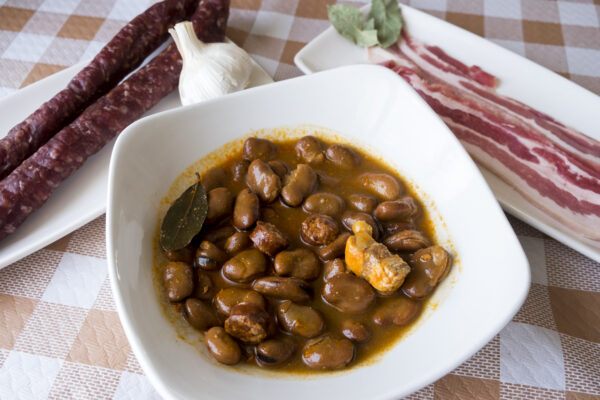
Michirones cartageneros.
I already spoke to you once about the michirones cartageneros, but very above, today I am going to deepen on its history and elaboration. Of peculiar name, the michirones are a typical vegetable stew of the Murcian orchard, of the Campo de Cartagena and also of the Vega Baja alicantina, extending its tradition to the nearest neighboring lands of Almeria and Albacete, as it happens with other border dishes like the atascaburras. Generally elaborated with a type of large and fleshy dry bean, it is usually served as a tapas or portion to share, often to be eaten by poking the legume with chopsticks, without missing the bread to dip the succulent broth of paprika and bay leaf. The broad bean to prepare the michirones is not very easy to find outside the mentioned lands, although it can also be cooked with the fresh broad bean that we use in the broad beans with ham, if it is in season, or its frozen version, more present in many supermarkets throughout the country. In these cases we will also save the soaking, because the michirón requires 48 hours of soaking. Otherwise it is not a complicated dish at all, faithful reflection of its humble origin and that in each home it is given a particular touch. What cannot be missing is the fresh sweet chorizo, bay leaf and Murcian paprika – obviously, La Vera paprika can be used – with its spicy touch, sometimes by means of cayenne or chilli peppers. The stew is enriched with a ham bone and, often, bacon or pancetta. To enrich the preparation even more, it is customary to add a good bit of sobrasada; it is optional but highly recommended if we have this product at that moment at home. Some people add potatoes to make it a more complete dish, but this is not the custom. If the broad bean is very hard, some diners prefer to eat them discarding the skin.
Ingredients:
For 4 persons
Dried broad beans 500 g
Ham bone or tip1
Fresh chorizo2
Bacon with meat (small, optional)1
Sobrasada a small piece
Head of garlic1
Bay leaves (or 3 if they are small leaves)2
Cayenne (optional)1
Sweet paprika
Hot paprika
Ground black pepper
Salt
The dried beans should be soaked for 48 hours, changing the water a couple of times in the process. If they are fresh, there is no need to soak them. The more soaking, the more tender they will be and the faster they will cook. Once soaked and drained, put the beans in a large pot with the bay leaf. Add the whole or chopped ham bone, the chorizos cut in rather thick slices, the bacon or bacon, and the head of garlic cut in half, peeled only in the outermost and loose layers. Add the cayenne (if you want it spicier), a generous teaspoon of sweet paprika and a little spicy, to taste. If sobrasada is added, reduce the amount of paprika, season lightly with salt and pepper – especially watch the amount of salt, it can be corrected at the end – and add enough water to cover them a couple of fingers. Heat, bring to the boil and cook over high heat for 10-15 minutes, skimming off any foam that may come out. Lower the heat, cover and let simmer for two to three hours. The final time will depend on the soaking time of the beans, their age and the hardness of the water. Move the pot from the handles, not using a spoon so as not to break the beans too much. Taste and adjust salt at the end. If they have too much broth, cook a few more minutes over high heat with the pot uncovered. It should not be excessively brothy, although it goes a little in tastes.
Level:
Executive Chef
Michirones cartageneros.
Ya os hablé una vez de los michirones cartageneros, pero muy por encima, hoy voy a profundizar sobre su historia y elaboración. De nombre peculiar, los michirones son un guiso de legumbres típico de la huerta murciana, del Campo de Cartagena y también de la Vega Baja alicantina, extendiéndose su tradición a las vecinas tierras más próximas de Almería y Albacete, como sucede con otros platos fronterizos como el atascaburras. Elaborado generalmente con un tipo de haba seca grande y carnosa, se suele servir de tapeo o ración para compartir, a menudo para tomar pinchando la legumbre con palillos, sin que falte el pan para mojar el suculento caldo de pimentón y laurel. El haba para preparar los michirones no es muy fácil de encontrar fuera de las tierras mencionadas, aunque también se puede cocinar con el haba fresca que usamos en las habitas con jamón, si es temporada, o su versión congelada, más presente en muchos supermercados de todo el país. En estos casos nos ahorraremos además el remojo, pues el michirón pide, 48 horas de remojo. Por lo demás no es un plato en absoluto complicado, fiel reflejo de su origen humilde y del que en cada hogar se le da un toque particular. Lo que no puede faltar es el chorizo fresco dulce, laurel y pimentón murciano -obviamente, se puede emplear de La Vera- con su toque picante, a veces por medio de cayenas o guindillas. El guisote se enriquece con un hueso de jamón y, a menudo, tocino o panceta. Para enriquecer aún más la preparación, es costumbre de añadir un buen pegote de sobrasada; es opcional pero muy recomendable si tenemos este producto en ese momento en casa. Hay quien agrega patata para convertirlo en un plato más completo, pero no es la costumbre. Si el haba es muy dura, algunos comensales prefieren comerlas desechando la piel.
Ingredientes:
Para 4 personas
Habas secas 500 g
Hueso o punta de jamón1
Chorizo fresco2
Tocino con carne (pequeño, opcional)1
Sobrasada un pegote
Cabeza de ajos1
Laurel (o 3 si son pequeñas hojas)2
Cayena (opcional)1
Pimentón dulce
Pimentón picante
Pimienta negra molida
Sal
Las habas secas deben estar a remojo 48 horas, cambiando el agua un par de veces en el proceso. Si son frescas, no hará falta remojarlas. Cuanto más remojo, más tiernas saldrán y más rápido se cocinarán. Una vez remojadas y escurridas, poner las habas en una olla grande con el laurel. Añadir el hueso de jamón entero o troceado, los chorizos cortados en rodajas más bien gordas, la panceta o tocino troceado, y la cabeza de ajo cortada por la mitad, pelada solo en las capas más exteriores y sueltas. Añadir las cayenas (si se quiere más picante), una cucharadita generosa de pimentón dulce y un poco de picante, al gusto. Si se agrega la sobrasada, reducir la cantidad de pimentones, salpimentar ligeramente —vigilar sobre todo la cantidad de sal, se puede corregir al final— y agregar agua suficiente para cubrirlas un par de dedos. Calentar, llevar a ebullición y cocinar a fuego vivo 10-15 minutos, retirando la espuma que pueda salir. Bajar el fuego, tapar y dejar cocinando a fuego lento entre dos y tres horas. El tiempo final dependerá del remojo de las habas, su edad y de la dureza del agua. Mover la olla desde las asas, no metiendo una cuchara para no romper demasiado la legumbre. Probar y ajustar de sal al final. Si tuvieran mucho caldo, cocer unos minutos más a fuego vivo con la olla destapada. No debe quedar excesivamente caldoso, aunque va un poco en gustos.
 Translated from Spanish