-

Antonio Salvador Moreno Carretero posted an update
Level: Executive Chef
Sailor, sailor and bicycle.
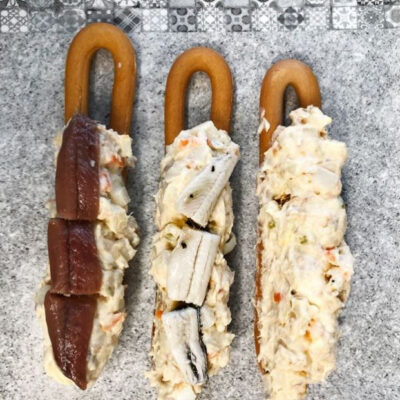
Legend has it that it all began in a humble bar in Cartagena, where a group of sailors used to meet for an aperitif. One day, one of them arrived late, when his companions had already finished the Russian salad, the star dish of the place. The straggler asked for something quick to take away, and the ingenious waiter, determined to please him with humor, placed a generous portion of salad on a crusty bagel and added a salted anchovy on top, saying: “Here, sailor, take your seafood”. That improvised creation would be the starting point for a tapa that would become a legend. Since then, the marinera is indisputably from Cartagena. Although it has crossed borders and is a gastronomic symbol throughout the region, no one ever argues, or should argue, that its cradle was the city bathed by the Mediterranean: Cartagena. This simple but irresistible snack consists of a crunchy doughnut covered with Russian salad adapted to the local palate: carefully chopped potato, hard-boiled egg, abundant canned tuna and tasty pickles mixed with a creamy mayonnaise. On top, a fine salted anchovy tops off this delicious delicacy with marine strength. The elongated, dry and crunchy bread doughnut is key so that the marinara does not fall apart at the first bite. Its perfect shape allows it to hold the ensaladilla without getting wet too quickly, making each bite a truly sensory experience. And although the basic recipe is well known, in Cartagena each bar jealously guards its own tricks to achieve the ideal marinera, which generates amusing debates among locals about where to try the best version. In addition, this tapa gave rise to other variants equally appreciated by the Cartagena public. There is the “marinero”, which replaces the anchovy with a soft anchovy in vinegar; the “bicicleta”, ideal for those who prefer to do without fish; and the nice “matrimonio”, which combines anchovy and anchovy together on top of the ensaladilla, thus combining the best of both worlds. The marinera quickly transcended the streets of Cartagena to become a regional and even national gastronomic phenomenon. Its popularity is due to the balanced simplicity of its flavors: the creamy freshness of the ensaladilla contrasts perfectly with the sea saltiness of the anchovy and the crunchy texture of the bread. In every corner of southeastern Spain, tourists and locals alike ask for it as an essential tapas dish, looking to savor this bite that carries with it the essence of the sea and the Cartagena tradition. Today, the marinera is much more than a tapa: it is Cartagena’s gastronomic heritage, an indisputable symbol of the Mediterranean tapas culture and a source of local pride. A delicious Cartagena invention that, from a simple humorous wink in a port bar, has managed to conquer palates far beyond its hometown.
Level:
Executive Chef
Marinera, marinero y bicileta.
Cuenta la leyenda que todo comenzó en un humilde bar de Cartagena, donde un grupo de marineros solía reunirse para tomar el aperitivo. Un día, uno de ellos llegó tarde, cuando sus compañeros ya habían acabado la ensaladilla rusa, plato estrella del lugar. El rezagado pidió algo rápido para llevar, y el ingenioso camarero, decidido a complacerle con humor, colocó una generosa porción de ensaladilla sobre una crujiente rosquilla de pan y añadió una anchoa en salazón encima, diciéndole: “Toma, marinero, tu marinera”. Aquella improvisada creación sería el punto de partida para una tapa que se convertiría en leyenda. Desde entonces, la marinera es indiscutiblemente cartagenera. Aunque ha cruzado fronteras y es símbolo gastronómico en toda la región, nunca nadie discute, o debería discutir, que su cuna fue la ciudad bañada por el Mediterráneo: Cartagena. Este bocado, sencillo pero irresistible, consiste en una rosquilla crujiente cubierta de ensaladilla rusa adaptada al paladar local: patata cuidadosamente picada, huevo duro, abundante atún en conserva y sabrosos encurtidos mezclados con una cremosa mayonesa. Encima, una fina anchoa en salazón remata con fuerza marina este delicioso manjar. La rosquilla alargada de pan, seca y crujiente es clave para que la marinera no se desmorone al primer bocado. Su forma perfecta permite sostener la ensaladilla sin humedecerse demasiado rápido, haciendo que cada mordisco sea una auténtica experiencia sensorial. Y aunque la receta base sea conocida, en Cartagena cada bar guarda celosamente sus trucos para conseguir la marinera ideal, lo que genera divertidos debates entre locales sobre dónde probar la mejor versión. Además, esta tapa dio lugar a otras variantes igual de apreciadas por el público cartagenero. Está el “marinero”, que sustituye la anchoa por un suave boquerón en vinagre; la “bicicleta”, ideal para quienes prefieren prescindir del pescado; y el simpático “matrimonio”, que combina anchoa y boquerón juntos sobre la ensaladilla, uniendo así lo mejor de ambos mundos. La marinera trascendió rápidamente las calles de Cartagena hasta convertirse en un fenómeno gastronómico regional e incluso nacional. Su popularidad se debe a la sencillez equilibrada de sus sabores: el cremoso frescor de la ensaladilla contrasta perfectamente con la salazón marina de la anchoa y la textura crujiente del pan. En cada rincón del sureste español, turistas y locales la piden como un imprescindible del tapeo, buscando saborear ese bocado que lleva consigo la esencia del mar y la tradición cartagenera. Hoy, la marinera es mucho más que una tapa: es patrimonio gastronómico de Cartagena, símbolo indiscutible de la cultura del tapeo mediterráneo y motivo de orgullo local. Un delicioso invento cartagenero que, desde un simple guiño humorístico en un bar portuario, ha logrado conquistar paladares mucho más allá de su ciudad natal.
 Translated from Spanish