-
Level:
 Executive Chef
Progress of the ‘Pickled Nuts’ | Second Month
Today is the day. Today, @loles-mhotmail-com and I share the progress of our experiment, the pickled walnuts, recipe from the course ‘Introduction to pickles’ by Robert Ruiz Moreno.
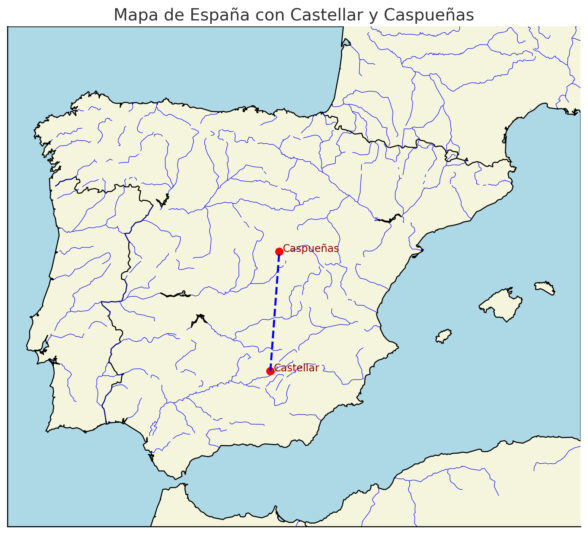
We started the experiment two months ago and decided to follow up on both of them, to be able to compare and see how the walnuts behave being in different places in Spain. Castellar (Jaén) and Caspueñas (Guadalajara) 272 kilometers away in a straight line (397 by road).
Two months have already passed and, for my part, this is what I observe:
Location: Caspueñas, Guadalajara, Spain
Ambient temperature: 20°C on average. At night, 19°C, during the day, 21°C (although probably throughout the month it has been 22 or 23).
Ambient humidity: 68%
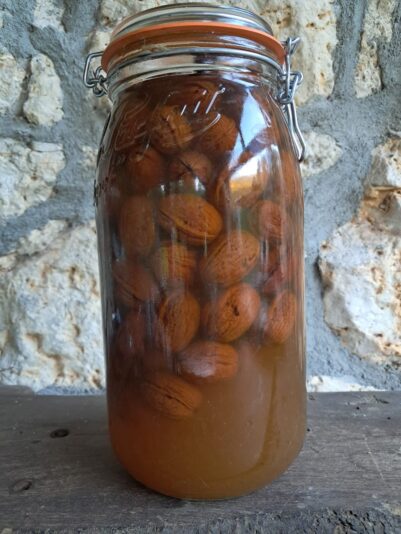
I note the liquid even darker than last month, and also a bit cloudy. The liquid level has dropped slightly, but very little.
However, as a novelty I have to say that, for some reason, the bottle is not hermetically sealed, because when I took it I noticed how around the lid it stained a little. I don’t know how this will affect the experiment.
In a month or a month and a half, according to Robert Ruiz’s indications, it will be ready to be opened and tested. By the way, in this case, it is not the nuts that are used, but the liquid to make soft drinks. Once strained, the liquid is mixed with a neutral beverage with bubbles, such as soda, tonic or soda. There is less time left to find out if it is tasty or not.
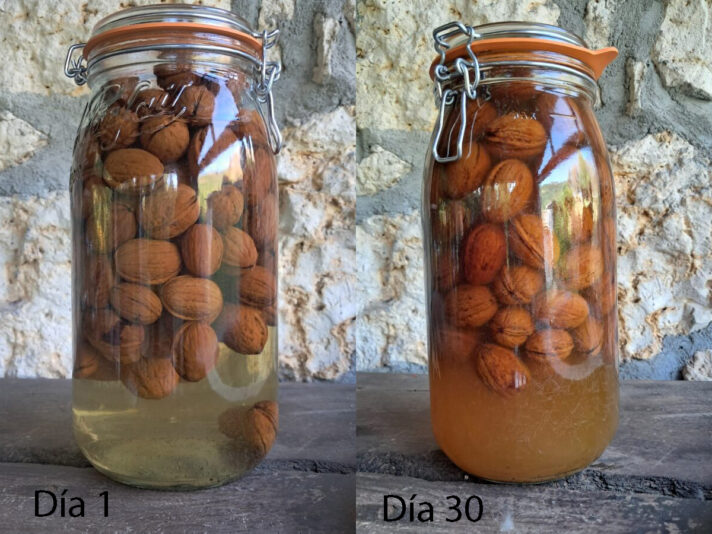
PS: to make the comparison easier to see, we added a photo with the nuts at the beginning and after the first month… and a map so you can see where each one of us is.
Level:
Executive Chef
Progreso de las ‘Nueces encurtidas’ | Segundo mes
Hoy es el día. Hoy, @loles-mhotmail-com y yo compartimos los avances de nuestro experimento, las nueces encurtidas, receta del curso ‘Introducción a los encurtidos’ de Robert Ruiz Moreno.
Iniciamos el experimento hace dos meses y decidimos hacer el seguimiento las dos, para poder comparar y ver cómo se comportan las nueces estando en diferentes lugares de España. Castellar (Jaén) y Caspueñas (Guadalajara) a 272 kilómetros de distancia en línea recta (397 por carretera).
Ya han pasado dos meses y, por mi parte, esto es lo que observo:
Lugar: Caspueñas, Guadalajara, España
Temperatura ambiental: 20°C de media. Por la noche, 19°C, durante el día, 21°C (aunque probablemente a lo largo del mes haya estado a 22 o 23).
Humedad ambiental: 68%
Observo el líquido aún más oscuro que el mes pasado, y también un poco turbio. Ha bajado ligeramente el nivel del líquido, pero muy poco.
Eso sí, como novedad he de decir que, por alguna razón, el frasco no está herméticamente cerrado, porque al cogerlo he notado cómo alrededor de la tapa manchaba un poco. No sé cómo podrá afectar esto al experimento.
En un mes o mes y medio, según las indicaciones de Robert Ruiz, ya se podrá abrir y probar. Por cierto, en este caso, no son las nueces lo que se aprovecha, sino el líquido para hacer refrescos. Una vez colado, ese líquido se mezcla con alguna bebida neutra con burbujas, tipo gaseosa, tónica o soda. Ya queda menos para saber si está rico o no.
PD: para que se vea bien la comparación, añadimos una foto con las nueces al inicio y al cabo del primer mes… además de un mapa para que veais dónde estamos cada una.
 Translated from Spanish
 Mercedes Minaya Palacios, Judy Keegan and 5 others10 Comments
-

Thank you for sharing your experiment! I think it is very useful to know the details for those who want to start in this, and how nice that you have reached this point together
Gracias por compartir su experimento!! Creo que sirve de mucho conocer los detalles para los que queremos iniciar en esto, y que lindo que hayan llegado hasta este punto juntas
1a year agoTranslated from Spanish
-
Level:
Executive Chef
@betzamedina Gracias Betzabé, sí, es una maravilla que nos hayamos liado juntas en esta aventurilla culinaria, que además nos ayudará a poder comparar los resultados. Seguiremos enseñándolo por aquí, estamos ya en el ecuador, antes de poder abrir los frascos.
1
-
-
Level:
Executive Chef
Oh! you can also see the difference in yours! I see that the liquid is more cloudy. The difference is certainly noticeable ! Now I don’t know if mine are cooked by the heat! 🤣
We’ll see how this turns out !
Level:
Executive Chef
Oh! también se nota bastante la diferencia en las tuyas! Veo que el liquido es más turbio. La diferencia es notable desde luego ! Ahora no sé si las mías están cocidas por el calor ! 🤣
Veremos en que acaba esto!
1a year agoTranslated from Spanish
-
Level:
Executive Chef
@loles-mhotmail-com Si, más que el color, lo que noto es la turbidez. No sé, puede ser por las nueces. Son recogidas del nogal de casa, pero las nueces caseras a veces tienen manchas negruzcas de la cáscara que las rodea, el pericarpio. Las lavé, frotando con un cepillo antes de meterlas en el frasco con el vinagre y el azúcar… pero no sé, igual quedó algo que ahora está desprendiendo el vinagre.
1-
Level:
Executive Chef
@beatriztorijagmail-com Pues lo mismo es eso, no sé.. este misterio tendría que resolverlo el mismo Robert Ruiz que seguro sabe el motivo 😅 Haber como terminamos después de los cuatro meses ! jajajaja
1-
Level:
Executive Chef
@loles-mhotmail-com jajaja, sí. Por cierto, me doy cuenta de que en mi texto he querido ahorrarme un mes de encurtido 🤭
-
-
-
-
Level:
Sous Chef
Love how you’ve turned it into a kind of culinary long-distance study! The differences in temperature, humidity, and even the slight leak around the lid make it all the more real and educational. Can’t wait to see (and imagine tasting!) the final result. Also, that bubbly drink idea with the pickling liquid sounds so intriguing!
1-
Level:
Executive Chef
@undefined yo también estoy intrigadísima… como despues de tanto tiempo, todo el follón que hemos montado y todas las expectativas puestas en el experimento… el refresco no esté bueno… 🫠
-
-
Level:
Scoolinary Team
Bea,thank you for sharing in such detail the evolution of your pickled walnuts. This experiment is coming to life with such different nuances depending on the environment. And those Day 1 – Day 30 comparison photos are a visual gem!
The contrast between Caspueñas and Castellar is crystal clear:
In your case, the higher humidity (68% vs. 19% in Jaén!) and milder temperatures seem to have generated a murkier, darker liquid, which is super interesting.
The Maloles bottle, on the other hand, maintains a somewhat clearer liquid, perhaps because of the intense and dry heat in the south.
The detail of the bottle not having closed completely is very valuable too, it may be a factor to observe in the final result, we’ll see if it influences or if the flavor remains intact!
I love how you have brought science, cooking and geography together in this experiment – a lovely collaboration!❤Level:
Scoolinary Team
Bea,gracias por compartir con tanto detalle la evolución de tus nueces encurtidas. Este experimento va cobrando vida con matices tan distintos según el entorno. ¡Y esas fotos comparativas Día 1 – Día 30 son una joya visual!
El contraste entre Caspueñas y Castellar es clarísimo:
En tu caso, la mayor humedad (¡68% frente al 19% de Jaén!) y temperaturas más suaves parecen haber generado un líquido más turbio y oscuro, lo que es súper interesante.
El frasco de Maloles, en cambio, mantiene un líquido algo más claro, quizás por el calor intenso y seco del sur.
El detalle del frasco que no ha cerrado del todo es muy valioso también, puede ser un factor a observar en el resultado final. ¡Veremos si influye o si el sabor se mantiene intacto!
Me encanta cómo han unido ciencia, cocina y geografía en este experimento. ¡Una colaboración preciosa!❤
1a year agoTranslated from Spanish
-
Level:
Executive Chef
@undefined ds que esta comunidad es una auténtica joya 💎 que da lugar a colaboraciones como ésta ❤️
-
-