-

Carmen Velasco posted an update
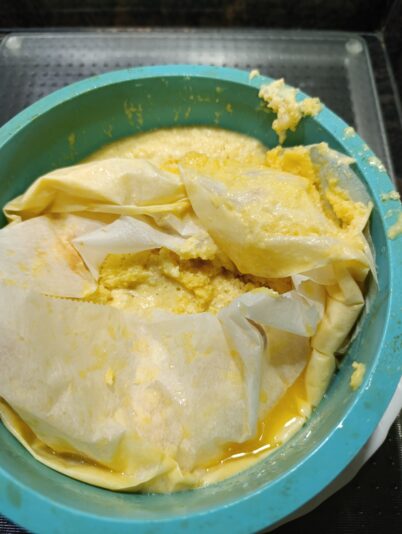
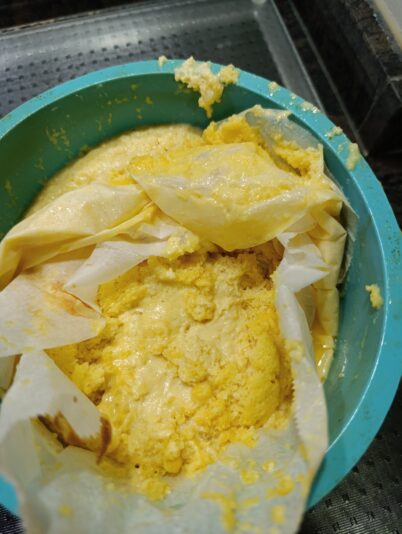
Here is my failed cotton cheesecake project from the Baked Cheesecake course.
As you can see, it came out as buttermilk and did not integrate at all. This is not the first time this has happened to me when making cheesecakes and I don’t understand why it is . It frustrates the hell out of me. Shame about ingredients, electricity and time 🫤😞.
what could have happened if I followed all the steps? I didn’t change anything, to the letter!!!!
I read you guys!
He aquí mi proyecto fallido de cotton cheesecake del curso Tartas de queso al horno.
Como veis, salió como suero y no se integró nada. No es la primera vez que me pasa esto al hacer tartas de queso y no entiendo por qué es . Me frustra muchísimo. Una pena de ingredientes, electricidad y tiempo 🫤😞
¿Qué puede haber pasado si seguí todos los pasos? No cambié nada, al pie de la letra!!
Os leo!
 Translated from Spanish
 Sol Damiani, Jorge Sainz and Orsolya Csernák13 Comments
-
 Level:
 Scoolinary Team
Hi Carmen.
I understand that preparing this type of cheesecake has its complications but let’s see thepossible mistakes and solutions:
1. Separation of the mixture into whey
Cause: It may be a problem with the emulsion of the cream cheese with the liquids. If the mixture of cheese, milk and butter was not well integrated before adding the egg yolks, it could have been cut.
Solution: Make sure the melted milk and butter mixture is not too hot when incorporated into the cream cheese. It should be lukewarm so as not to cause separation.
2. Unstable meringue
Cause: If the meringue was not whipped correctly or was incorporated abruptly, it could have lost stability and not given the necessary structure.
Solution: Whip the egg whites until stiff peaks, but do not over whip. Then incorporate them with gentle enveloping movements in several batches.
3. Cooking problem
Cause: An inadequate bain-marie (lack of water or incorrect temperature) can cause the cheesecake not to cook evenly and end up separating.
Solution: Make sure the mold is well sealed (if using a removable mold, wrap with aluminum foil). Also, make sure that the water covers at least â of the pan and that the oven temperature is as indicated.
4. Cooling time
Cause: If the cheesecake is removed from the oven before it is completely cooled, the sudden change in temperature may cause it to collapse and separate.
Solution: Follow the step of leaving the cheesecake in the oven off until completely cooled.
I have a few questions for you to find out what might be going on.
How did you integrate the cream cheese mixture with the milk and butter?
How was the texture of the meringue before mixing?
Did the water bath have enough water and was the oven at the right temperature?
Did you let the cheesecake cool completely in the oven?
Together we are going to use a solution so that in the next time you make cotton Cheesecake it will turn out great.
Cheers.
Level:
Scoolinary Team
Hola Carmen.
Entiendo que preparar este tipo de cheesecake tiene sus complicaciones pero vamos a ver los posibles errores y soluciones:
1. Separación de la mezcla en suero
Causa: Puede ser un problema con la emulsión del queso crema con los líquidos. Si la mezcla de queso, leche y mantequilla no quedó bien integrada antes de añadir las yemas, podría haberse cortado.
Solución: Asegurarse de que la mezcla fundida de leche y mantequilla no esté demasiado caliente al incorporarla al queso crema. Debería estar tibia para no provocar separación.
2. Merengue inestable
Causa: Si el merengue no se montó correctamente o se incorporó bruscamente, podría haber perdido estabilidad y no haber dado la estructura necesaria.
Solución: Montar las claras hasta picos firmes, pero sin sobrebatir. Luego, incorporarlas con movimientos envolventes suaves en varias tandas.
3. Problema en la cocción
Causa: Un baño maría inadecuado (falta de agua o temperatura incorrecta) puede provocar que el cheesecake no se cocine de manera uniforme y termine separándose.
Solución: Verificar que el molde esté bien sellado (si usas un molde desmontable, envolver con aluminio). Además, asegurarse de que el agua cubra al menos ⅓ del molde y que la temperatura del horno sea la indicada.
4. Tiempo de enfriado
Causa: Si se saca el cheesecake del horno antes de que se enfríe completamente, el cambio brusco de temperatura puede hacer que colapse y se separe.
Solución: Seguir el paso de dejar el cheesecake en el horno apagado hasta que se enfríe completamente.
Tengo algunas preguntas para tí para saber que podría estar pasando.
¿Cómo integraste la mezcla de queso crema con la leche y mantequilla?
¿Cómo estaba la textura del merengue antes de mezclarlo?
¿El baño maría tenía suficiente agua y el horno estaba a la temperatura correcta?
¿Dejaste el cheesecake enfriar completamente dentro del horno?
Juntas vamos a usar una solución para que en una próxima oportunidad te cotton Cheesecake salga genial.
Saludos.
1a year agoTranslated from Spanish
-
@undefined hello!
I took the cream cheese out of the fridge well in advance to temper and that there was not so much difference. I put in the milk and butter (also at room temperature) and removed it just as it was starting to melt and finished integrating the butter with the whisk. It was lukewarm.
The meringue was very firm, hard. I did it in 4 batches integrating well the first one to homogenize and the following ones with an enveloping movement. It is true that there were white streaks when I put it in the mold because I didn’t want to beat it too much and have it go down.
I put a thermometer inside the oven to check the temperature and I put the container with water inside to ensure that the water had the same temperature as the oven.
And yes, it was inside until it cooled completely. When I turned it off I saw that it was moving a lot but I thought it should finish curdling as it cooled. But nothing, when I wanted to unmold…. the mold is silicone not removable.
It is not the first time that happens to me with these masses and I can not figure out why it is.
Thanks Sussan.
@undefined hola!
Saqué el queso crema de la nevera con suficiente antelación para atemperar y que no hubiera tanta diferencia. Puse la leche y la mantequilla (también a temperatura ambiente) y lo retiré en el momento en que comenzaba a derretir y terminé de integrar la mantequilla con las varillas. Estaba templado.
El merengue estaba muy firme, duro. Lo hice en 4 tandas integrando bien la primera para homogeneizar y las siguientes con movimiento envolvente. Sí es cierto que había vetas blancas a la hora de poner en molde porque no quise batir de más y que se bajará.
Pongo termómetro dentro del horno para comprobar la temperatura y puse el recipiente con agua dentro para asegurar que el agua tuviera la misma temperatura que el horno.
Y sí, estuvo dentro hasta enfrían por completo. Ya al apagar vi que se movía mucho pero pensé que debía terminar de cuajar según enfriarse. Pero nada, al querer desmoldar…. el molde es de silicona no desmontable.
No es la primera vez que me pasa con estas masas y no logro saber por qué es.
Gracias Sussan.
a year agoTranslated from Spanish
-
Los huevos también estaban a temperatura ambiente.
-
Level:
Scoolinary Team
Hola @dcarmenvdgmail-com
Gracias por los detalles, esto nos ayuda mucho a entender qué pudo haber fallado.
-Análisis de posibles errores
1. El merengue estaba demasiado firme:
El merengue demasiado duro puede dificultar su incorporación y generar vetas blancas en la masa, lo que indica que no se mezcló completamente.
Para una próxima oportunidad,Intenta montar las claras hasta picos medios-firmes, no duros. Un merengue demasiado montado no se integra bien y puede hacer que la mezcla se desestabilice.
2. El molde de silicona vs. el de metal
La chef usa un molde de metal/aluminio, que distribuye mejor el calor. La silicona es aislante y no transmite el calor de manera uniforme, lo que puede hacer que el cheesecake no se cocine de manera pareja y quede más líquido en el centro.Asi que aunque hornees a la temperatura indicada en el recetario el molde de silicón no permitirá que la mezcla o cheesecake no llegue a la temperatura indicada.
Puedes probar con un molde de metal o aluminio. Si solo se tienes de silicona, intentar precalentar la bandeja donde irá apoyado el molde para compensar la diferencia de conducción térmica y deja cocinar unos minutos más.
3. Textura muy líquida al apagar el horno
Si al apagar el horno el cheesecake aún se movía demasiado, es posible que no haya cuajado bien. Esto puede ser porque el baño maría no estaba en su punto óptimo o por la combinación de factores anteriores (tipo de molde metal/silicona).
Una solución seria hornear 5-10 minutos más a 160°C antes de apagar el horno y dejar enfriar dentro.
Próximo intento con ajustes:
-Usar un molde de metal el cual conduce mejor el calor.
-Montar el merengue hasta picos medios-firmes, no demasiado secos.
-Hornear un poco más si al apagar el horno la textura sigue muy líquida.
Creo que el cambio del molde puede hacer una gran diferencia. ¿Tienes uno de metal para probar?
Saludos.-
@sussan_scoolinaryteam Hola! tengo uno desmontable y no me atreví por si le entraba agua. Probaré de nuevo con todo lo que comentas, a ver qué consigo! Muchas gracias!
-
Level:
Scoolinary Team
@dcarmenvdgmail-com perfecto!
Cómo recomendación puedes cubrir tu molde con papel plástico de cocina y pasar 2 veces para que el agua del baño María no entre también puedes usar un paño entre el agua y el molde para que no llegue directamente el agua al molde. Ya nos cuentas que tal te va. ✨
-
-
-
-
Cheer up, next time it will turn out well, whoever doesn’t try won’t make a mistake.
Caramba, ánimo que a la próxima saldrá bien, quien no lo intenta no se equivoca.
1a year agoTranslated from Spanish
-
I will take your advice to heart and try again.
Thank you very much 🤗Tendré muy en cuenta tus consejos y volveré a intentarlo.
Muchas gracias 🤗
1a year agoTranslated from Spanish
-
Level:
Scoolinary Team
@dcarmenvdgmail-com 100% segura que obtendrás un mejor resultado. ¡Ánimos!
-
-
Level:
Executive Chef
What a bummer Carmen. I understand you perfectly, after so much work it is frustrating. I don’t know what could have happened but don’t get discouraged and try again when you feel like it. I’m sure you will get it😉.
Level:
Executive Chef
Qué mala pata Carmen. Te entiendo perfectamente, después de tanto trabajo es frustrante. No sé que ha podido pasar pero no te desanimes e intenta de nuevo cuando tengas ganas. Seguro que te haces con ella😉
1a year agoTranslated from Spanish
-
@undefined Gracias!
-
-
@sussan_scoolinaryteam I’m reworking the recipe and before baking it separates the dough in two. I did it all together, could it have affected or shouldn’t it, can it be done all at once?
@sussan_scoolinaryteam estoy reviendo la receta y antes de hornear separa la masa en dos. Yo lo hice todo junto, ¿puede haber afectado o no debería? ¿Se puede hacer de una vez?
a year agoTranslated from Spanish
-
Level:
Scoolinary Team
@dcarmenvdgmail-com I would advise you to follow the steps as the chef does it, if she separates the dough in means that her recipe yields for two molds, if you do it in a single mold the cooking time would be different. You would have to bake it a few more minutes, approximately 8 to 10 minutes more or until the center is still a little soft.
Greetings.
Level:
Scoolinary Team
@dcarmenvdgmail-com yo te aconsejaría que siguieras los pasos tal cual lo hace la chef, si ella separa la masa en quiere decir que su receta rinde para dos moldes, si lo haces en un solo molde el tiempo de cocción sería distinto. Tendrías que hornear unos minutos más aproximadamente 8 a 10 minutos más o hasta que el centro aun esté un tanto suave.
Saludos.
a year agoTranslated from Spanish
-
-