-

Jorge Sainz posted an update
In the Gulf of Mexico we have a fish called Pampano, with a delicate flavor and so mild that it is also called Pez Mantequilla. Traditionally I use this sea fruit to prepare it in a salt crust.
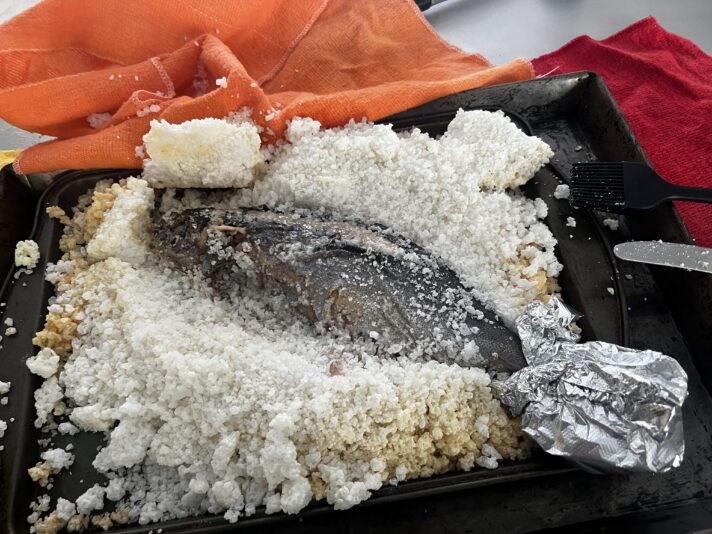
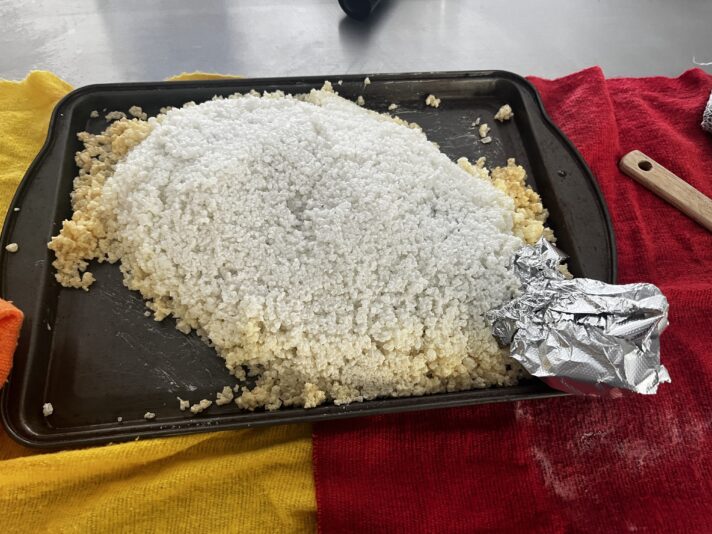
In a blender, food processor or food processor, add enough salt grains to cover the fish, the white of three eggs and half a cup of white wine. Process until a paste of the ingredients is generated. Place on a baking sheet the necessary paste to cover the product, place it and cover it with the remaining paste; with a knife delicately draw its shape. Preheat the oven to 200 oC and bake the product for 15 minutes per kilogram of weight. The salt will turn brown and harden. Remove from the oven and beat the hardened dough until it starts to come off. With a small shovel, remove the crust until the food is uncovered.
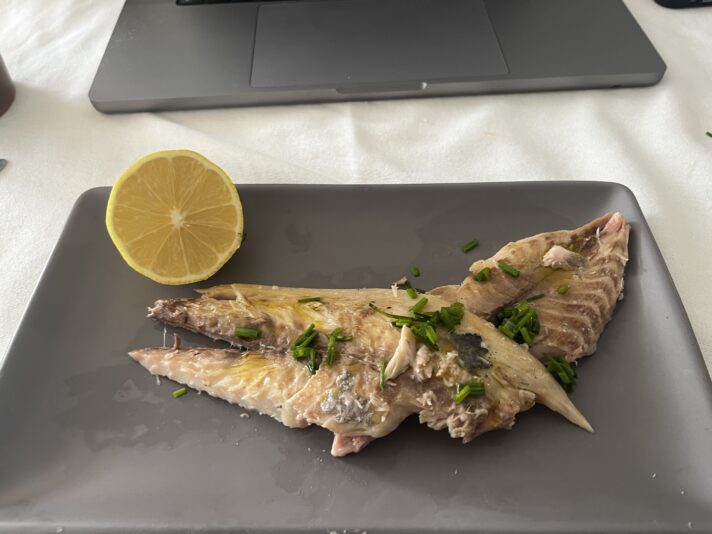
Carefully remove the fish and place it on a large plate with a delicate food-safe scoop. Remove the skin and remove the loins, avoiding the bones. If salt remains, remove it with a brush. There will be two upper and two lower loins; the latter will have many more bones. Dress with lemon, chives and a few drops of extra virgin olive oil.
This cooking technique can also be used for cuts of meat and even with shrimp – to prevent salt from entering through the heads, I usually put small slices of tomato to cover the junction of the body and head.
¡Buen Provecho!
En el Golfo de México tenemos un pez llamado Pámpano, de sabor delicado y tan suave que también se le llama Pez Mantequilla. Tradicionalmente uso este fruto de mar para prepararlo en costra de sal.
En una licuadora, procesador de comida o robot de cocina, agregar sal en grano suficiente para cubrir al pescado, la clara de tres huevos y media taza de vino blanco. Procesar hasta que se genere una pasta de los ingredientes. Poner en una charola de hornear la pasta necesaria para albergar al producto, colocarlo y cubrirlo con la pasta restante; con un cuchillo dibujar delicadamente su forma. Precalentar el horno a 200 oC y hornear el producto 15 minutos por cada kilogramo de peso. La sal se tornará café y endurecerá. Retirar del horno y golpear la pasta endurecida hasta que se empiece a desprender. Con una palita, quitar la costra hasta descubrir el alimento.
Con mucho cuidado y con una palita apta para comida delicada, retirar el pescado y colocarlo en un plato grande. Quitar la piel y desprender los lomos evitando las espinas. Si quedase sal, con una brocha retirarla. Serán dos lomos superiores y dos inferiores; estos segundos tendrán muchas más espinas. Aliñar con limón, cebollín y unas gotas de aceite de oliva virgen extra.
Esta técnica de cocción también puede utilizarse para cortes de carne e incluso con camarones – para evitar que entre la sal por las cabezas, normalmente le pongo pequeñas rebanadas de jitomate para cubrir la unión del cuerpo y la cabeza.
¡Buen Provecho!
 Translated from Spanish
 Mercedes Delgado de Miguel, Sol Damiani and 3 others4 Comments
-
 Level:
 Scoolinary Team
Siempre es lindo leerte Jorge, no solo nos presentas unos platos increíbles si no que están llenos de historia y datos increíbles.
Gracias por compartirlo con nosotros.🫶🏻
1 -
Level:
Executive Chef
Jorge, esta receta me la guardo porque me parece estupenda. Yo hago la dorada a la sal pero solo pongo sal y un poquito de agua para humedecerla y sale muy rica. Pero tu forma de hacerla me parece genial. Gracias siempre por compartir tus recetas y sabiduría. 🙌
1 -
Level:
Stagier
Uno de esosnplatos deliciosos y saludables! Gracias por los datos, llevaba tiempo preguntando tanto me cuanto tiempo por kl.🤩
-
Level:
Scoolinary Team
😋Voy a probar esta receta con el pescado que encuentre en la pescadería. ¡Gracias, Jorge!
-