-

Jorge Sainz posted an update
2 years ago (edited)
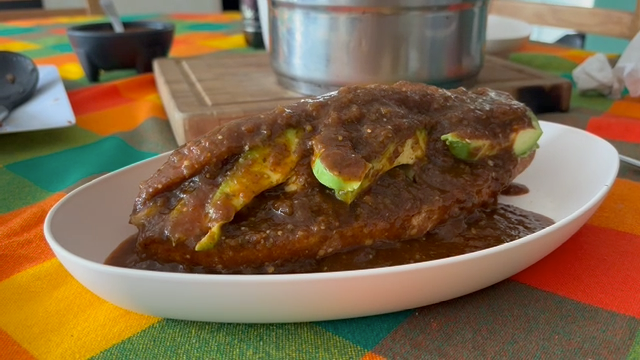
This dish has two stories, one romantic and one practical.
The romantic one is that during the Mexican Revolution (civil war in other geographies), the rebels were followed by their women, called “soldaderas” (soldiers) and affectionately known as “Adelitas”. It is worth mentioning that between 1910 and 1920, the time that the hostilities lasted, sustenance was scarce and one had to make the most of what one could. The story goes that an Adelita, arriving in the city of Guadalajara, found baguette-type bread, completely hardened by time, but, in order not to discard them, she thought of submerging them in some liquid that would remove the hardness (a very spicy and watery sauce that she had at the time) and then fill them with whatever she had for her family to eat; on this occasion, it was bits of pork meat. The bread used was called Birote, in honor of a French baker who, during the invasion of Mexico by Maximilian of Habsburg, taught the people of Guadalajara how to prepare it. His name: Camille Pirotte.
The other story that is told is that, around the 50’s of the last century, a man who sold tortas – a small baguette that can have milanesa, cheese, ham or anything else – when he was preparing one of them, he dropped it in the sauce pot and the customer told him that he would eat it that way. The torta at that time was made of pork confit, which is now the typical filling of this dish.
In both cases the product is called Torta Ahogada.
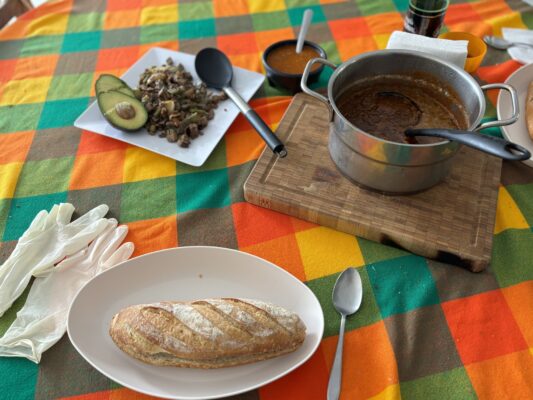
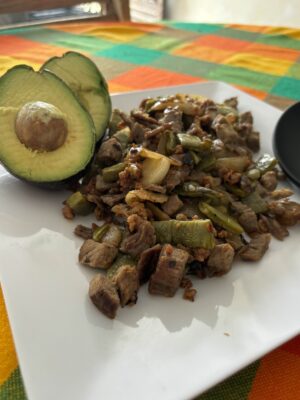
On Sunday we had a barbecue at home and had leftover beef eye and churrasco, onions and cambray cactus; on Monday we had leftover sauce from the marinated beef tongue; on Tuesday we had leftover cecina, longaniza, caramelized onion and chicharrón.
Using all the ingredients and with a couple of birotes we had from last week, we prepared tortas ahogadas with everything that was left over in order to participate in the #RetoDesperdicioCero of this, our second home for those of us who love cooking.
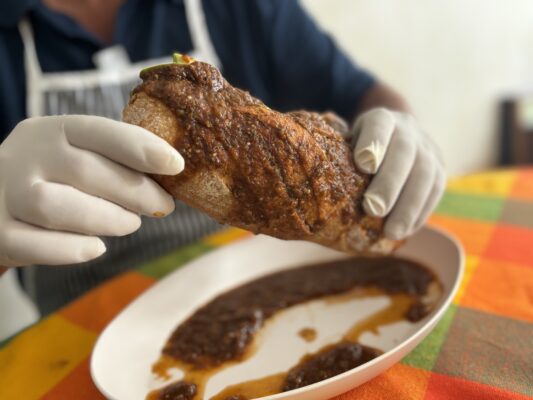
The platform does not allow me to include in the same post video and photo so, in the comments, I will put the ones I took; in the one where I appear taking the cake with gloves, it is because, being the sauce so spicy, if after eating you touch your eyes, or it occurs to you to scratch your nose, you will remember for a couple of hours, what you sadly ate without covering your hands!
¡Buen Provecho!
Este platillo tiene dos historias, una romántica y otra práctica.
La romántica es que, durante la revolución mexicana (guerra civil en otras geografías), a los rebeldes los seguían sus mujeres, llamadas soldaderas y de cariño Adelitas. Cabe aclarar que entre 1910 y 1920, tiempo que duraron las hostilidades, el sustento era escaso y se debía aprovechar lo más que se pudiera. Cuenta entonces la historia, que una Adelita, llegando a la ciudad de Guadalajara, encontró panes tipo baguette, completamente endurecidos por el tiempo, pero, para no desecharlos, pensó en sumergirlos en algún líquido que les quitara la dureza (una salsa muy picante y acuosa que tenía en ese momento) para, después, rellenarlo de lo que tuviera para que lo consumiera su familia; en esta ocasión, fueron pedacitos de carne de chancho. El pan utilizado, recibía el nombre de Birote, en honor de un panadero francés, que, durante la invasión a México por Maximiliano de Habsburgo, enseñó a los tapatíos (gentilicio de la gente de Guadalajara) a preparar. Su nombre: Camille Pirotte.
La otra historia que se cuenta es que, por allí de los años 50 del siglo pasado, un señor que vendía tortas – una baguette pequeña que puede tener milanesa, queso, jamón o cualquier otra cosa – al estar preparando una de ellas, se le cayó en el bote de salsa y el cliente le dijo que asi se la comería. La torta en ese momento era de carne de cerdo confitada, que ahora es el relleno típico de este platillo.
En ambos casos el producto se llama Torta Ahogada.
El domingo en casa tuvimos un asado y sobró ojo de bife y churrasco, cebollas y nopales cambray; el lunes sobró salsa de la lengua de res adobada; el martes sobraron cecina, longaniza, cebolla caramelizada y chicharrón.
Usando todos los ingredientes y con un par de birotes que teníamos de la semana pasada, preparamos pues, tortas ahogadas con todo lo que quedó a fin de participar en el #RetoDesperdicioCero de este, nuestro segundo hogar para los que somos amantes de la cocina.
La plataforma no me permite incluir en el mismo mensaje video y foto por lo que, en los comentarios, pondré las que tomé; en aquella donde aparezco tomando la torta con guantes, se debe a que, siendo la salsa tan picante, si después de comer se tocan los ojos, o se les ocurre rascarse la nariz, recordaran durante un par de horas, lo que tristemente comieron sin cubrirse las manos!
¡Buen Provecho!
0:17
Translated from Spanish Mercedes Delgado de Miguel, Sol Damiani and 5 others8 Comments
-
-

Esta es la combinación de todo lo que quedó de las comidas anteriores

-
Mentada foto de los guantes
-
Level:
 Scoolinary Team
Hola Jorge.
Me gusta el relato que nos haces sobre estos platillos, no solo están llenos de historia si no que se ven muy ricos y nos transporta a sus raíces, orígenes. Es interesante como integraste los restos del asado y otros ingredientes en las tortas y aprovechaste al máximo todo lo que tenías a la mano. Tu presentación es inspiradora que celebra la cocina sin desperdicio.
Gracias por tomarte el tiempo de contarnos un poquito de las tradiciones de país, disfrute leerte.
Saludos.
1 -
Me encanto el plato y la historia
1 -
Qué hermosa historia, me encantó conocer un poco más de la gastronomía de tu pais y por supuesto se ve muy apetitoso todo, me dieron muchas ganas de probarlo
-
Level:
Executive Chef
Cuanto me gustaría sentarme a tu mesa y degustar tu cocina llena de historia. Magnífico Jorge 👏
1 -
Level:
Scoolinary Team
Tu historia vendría a ser un prólogo de lo que más tarde se conoció como Cocina con Desperdicio Cero. Es exactamente el alma de toda esta cuestión. Gran trabajo y gran presentación, Jorge. Ya te lo he dicho antes pero lo repito pues ¿por qué no hacerlo? Amo como cuentas tus historias. Brindemos por esas Adelitas 🙌🥂 Legados que no mueren.
1
-